
This article contains affiliate links. If you purchase through these links, we may earn a commission at no extra cost to you.
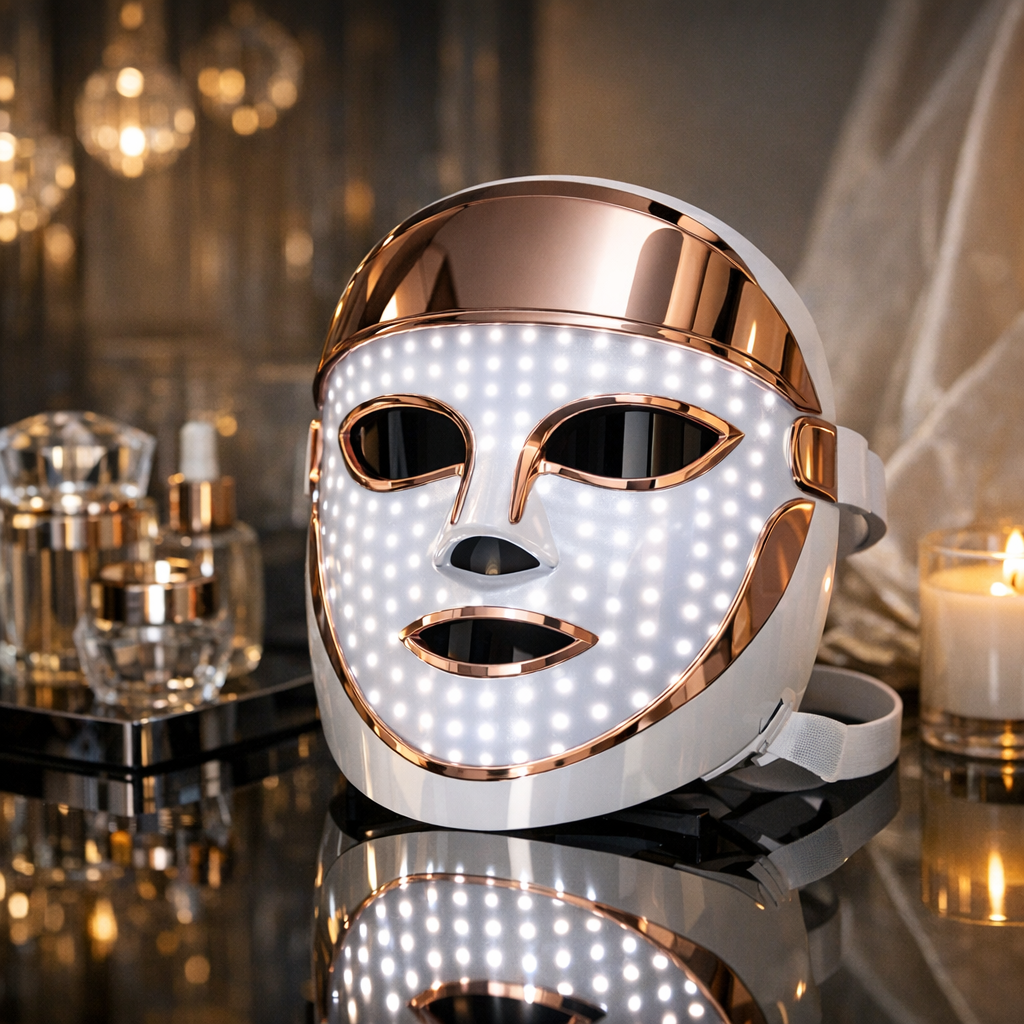
At-home LED light therapy has moved well beyond novelty. The clinical data is clear, the technology has matured, and the best LED masks now available for home use represent a genuine leap from the single-wavelength panels that launched the category. For women navigating the visible signs of skin aging — loss of collagen density, surface texture changes, hyperpigmentation, and fine lines — the best LED masks for anti-aging deliver photobiomodulation: a cellular process in which specific light wavelengths trigger mitochondrial activity, stimulate fibroblast production, and accelerate tissue repair without heat, downtime, or risk. The Lab has evaluated the current LED mask landscape using technology specifications, clinical study data, and verified user outcomes to identify the devices that earn a place in a results-focused protocol. What follows are the best LED masks and the definitive curated edit for 2026.
Quick Picks
- CurrentBody Skin LED 4-in-1 Zone Facial Mapping Mask — Clinical · DL-Chosen — Best for: multi-wavelength zone-targeted anti-aging across the full face
- CurrentBody Skin LED Multi Light Therapy Mask — Clinical — Best for: six-wavelength full-face LED protocol for comprehensive skin correction
- CurrentBody Skin LED Red Light Therapy Face Mask Series 2 — Performance — Best for: red and near-infrared anti-aging with deep near-infrared penetration
- Dr. Dennis Gross DRx SpectraLite FaceWare Pro — Performance — Best for: dual red and blue light therapy in a three-minute daily protocol
- iRestore LED Face Mask — Performance — Best for: red, blue, and infrared tri-wavelength therapy with 360 LEDs
- CurrentBody Skin LED Blue Light Therapy Face Mask Series 2 — Performance — Best for: combined red and blue LED for skin clarity and anti-aging
- Foreo FAQ™ 202 plus — Performance — Best for: FDA-cleared near-infrared and red light therapy in a flexible silicone format
- Foreo FAQ™ 202 — Performance — Best for: near-infrared and red light anti-aging with Foreo’s signature silicone construction
- CurrentBody Skin LED Eye Mask — Entry — Best for: targeted red and near-infrared treatment for the periorbital zone
- Foreo FAQ™ 201 — Entry — Best for: entry-level LED anti-aging therapy with clinical wavelength delivery
Comparison Chart
| Device | Tier | Key Technology Claim | Best For | The DL Source |
|---|---|---|---|---|
| CurrentBody Skin LED 4-in-1 Zone Facial Mapping Mask | Clinical – ★ DL-Chosen | Four independent treatment zones with multi-wavelength LEDs per zone | Zone-targeted full-face anti-aging | Explore |
| CurrentBody Skin LED Multi Light Therapy Mask | Clinical | Six clinically proven LED wavelengths including red, near-infrared, blue, green, yellow, and deep near-infrared | Comprehensive multi-wavelength skin correction | Explore |
| CurrentBody Skin LED Red Light Therapy Face Mask Series 2 | Performance | Red + near-infrared + deep near-infrared wavelengths; 56-day independent clinical study | Red and NIR anti-aging protocol | Explore |
| Dr. Dennis Gross DRx SpectraLite FaceWare Pro | Performance | 100 red LEDs + 60 blue LEDs; FDA-cleared; three-minute auto shut-off treatment | Dual-mode acne and anti-aging | Explore |
| iRestore LED Face Mask | Performance | 360 LEDs across red, blue, and infrared wavelengths; full-face coverage | Tri-wavelength full-face therapy | Explore |
| CurrentBody Skin LED Blue Light Therapy Face Mask Series 2 | Performance | FDA-cleared red and blue LED combination; advanced clarity and anti-aging | Skin clarity and surface-level correction | Explore |
| Foreo FAQ™ 202 plus | Performance | FDA-cleared near-infrared and red light; flexible silicone construction | NIR + red anti-aging in wearable format | Explore |
| Foreo FAQ™ 202 | Performance | Near-infrared and red light therapy; Foreo silicone mask platform | Consistent NIR and red light protocol | Explore |
| CurrentBody Skin LED Eye Mask | Entry | Red and near-infrared light targeted to the periorbital zone | Periorbital fine lines and dark circles | Explore |
| Foreo FAQ™ 201 | Entry | LED anti-aging therapy with clinical wavelength delivery | Entry-level LED anti-aging protocol | Explore |
Table of Contents
How the Best LED Masks Work for Anti-Aging
LED therapy operates on the principle of photobiomodulation — the absorption of specific light wavelengths by cellular structures, particularly cytochrome c oxidase in the mitochondria. When red light (typically 630–660 nm) and near-infrared light (800–850 nm) penetrate the dermis, they trigger a cascade of biochemical events: mitochondrial ATP production increases, fibroblast activity accelerates, collagen and elastin synthesis is upregulated, and inflammatory pathways are regulated. The result, documented across multiple peer-reviewed randomized controlled trials, is measurable improvement in skin density, fine line depth, and surface texture with consistent use. The best LED masks for anti-aging are engineered to deliver these wavelengths at clinically effective intensities, with FDA clearance and independent study data separating the credible devices from the noise.
Board-certified dermatologist Dr. Dendy Engelman explains the mechanism precisely: “Red light therapy is a type of treatment that works by inducing skin regeneration in a noninvasive way — exposing the skin to safe wavelengths of light.” She notes that the technology “causes cells to work more efficiently while regenerating and repairing damage, without pain or downtime.”
The wavelength range matters significantly. Research published in Medicine (2025) confirmed that LED and infrared light at 600–660 nm and 800–860 nm stimulates cells of the dermal and epidermal tissue and is effective in wrinkle improvement and anti-aging. Blue light (415 nm) operates differently — targeting surface bacteria and sebum production — making the best LED masks with multi-wavelength capability able to address both aging and clarity concerns within a single protocol.
Best LED Masks for Anti-Aging: Full Reviews
CurrentBody Skin LED 4-in-1 Zone Facial Mapping Mask — DL-Chosen
The most architecturally sophisticated LED mask in the at-home category, delivering independent multi-wavelength treatment across four precisely mapped facial zones for the kind of targeted photobiomodulation that single-panel masks cannot replicate.
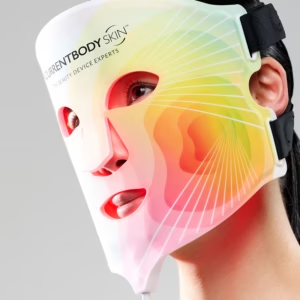
The 4-in-1 Zone Facial Mapping Mask represents a structural leap from conventional full-panel LED masks. Where most devices deliver uniform light across the entire face, this mask segments treatment into four independent zones — forehead, mid-face, lower face, and periorbital — each capable of delivering multiple wavelengths simultaneously or independently. This architecture allows the device to address the distinct biological needs of different facial regions: the thinner, more delicate periorbital skin responds to different wavelength intensities than the denser dermis of the cheeks or jawline.
The multi-wavelength LED array includes clinically validated wavelengths spanning red and near-infrared, with the zone-mapping technology ensuring light reaches the skin surface at optimal angles and proximity regardless of facial contour variation. This is a meaningful engineering distinction — a mask that flexes to facial topography delivers more consistent photon delivery than a rigid panel that creates air gaps over concave areas.
For women 40 and above targeting visible loss of facial volume, structural firmness, and fine line correction across multiple zones simultaneously, the 4-in-1 represents the Clinical-tier ceiling of what at-home LED technology currently delivers.
Pros
- Four independent treatment zones for targeted photobiomodulation
- Multi-wavelength LED delivery per zone
- Clinically sophisticated architecture not replicated in single-panel devices
- Addresses varied skin density needs across facial regions
Cons
- Clinical-tier investment
- Protocol requires consistent use for cumulative results
- More complex operation than single-mode masks
CurrentBody Skin LED Multi Light Therapy Mask
A six-wavelength full-face LED platform — the most spectrally comprehensive mask in the roster — delivering clinically proven red, near-infrared, blue, green, yellow, and deep near-infrared light in a single FDA-cleared treatment session.

The Multi Light Therapy Mask is the broadest-spectrum LED device in this edit. Six distinct wavelengths operating within a single mask means a single protocol session addresses collagen stimulation (red and near-infrared), bacterial control and surface clarity (blue), hyperpigmentation and calming (green), skin tone evenness and photoaging repair (yellow), and deep dermal penetration (deep near-infrared). For users with multiple simultaneous skin concerns — a combination of fine lines, uneven tone, and surface texture irregularities — this device eliminates the need for layering multiple single-modality tools.
FDA-cleared with 121 verified reviews averaging 4.8 stars, the clinical evidence behind this mask is supported by independent study data confirming measurable outcomes across the six-wavelength protocol.
Pros
- Six clinically proven wavelengths in a single device
- FDA-cleared
- Addresses multiple skin concerns simultaneously
- Verified clinical outcomes
Cons
- Clinical-tier positioning
- Requires consistent multi-week protocol for visible results
CurrentBody Skin LED Red Light Therapy Face Mask Series 2
The updated flagship of the original red and near-infrared LED mask platform, now incorporating a deep near-infrared third wavelength validated across a 56-day independent dermatological study on women aged 40–55.

Series 2 adds deep near-infrared to the red and near-infrared combination that made the original mask a benchmark device in the category. The addition of the third wavelength extends photon penetration depth, reaching dermal layers where structural collagen remodeling occurs. The independent 56-day clinical study — conducted on 30 female subjects aged 40–55 with mild to moderate signs of photoaging — provides specific evidence directly relevant to this article’s target user profile.
Dr. Engelman has specifically endorsed this device: “I love the CurrentBody LED Light Therapy Face Mask because it is powered by red and near-infrared light. It is lightweight and convenient and works by accelerating collagen production and increasing blood circulation. It reduces inflammation and signs of aging over time on your own time in your own home.”
One verified buyer reports: “It’s been at least 10 weeks and my skin is looking better every week. The key is to be diligent in its use.”
Pros
- Three-wavelength protocol (red, near-infrared, deep near-infrared)
- Independent 56-day clinical study on women 40–55
- Dermatologist-endorsed technology
- Lightweight and flexible construction
Cons
- Results require consistent weekly use over minimum 8–10 weeks
- Single anti-aging modality (no blue light for clarity concerns)
Dr. Dennis Gross DRx SpectraLite FaceWare Pro
An FDA-cleared dual-modality LED mask combining 100 red and 60 blue LEDs in a three-minute auto-shutoff protocol, with clinical data showing 97% of participants reported improvement in fine lines, wrinkles, and skin tone after 10 weeks.

The SpectraLite FaceWare Pro’s clinical study data is among the most specific in the at-home LED category: 97% of subjects showed improvement in fine lines, wrinkles, and skin tone after 10 weeks; 97% showed improvement in acne after just two weeks. The three-minute protocol with automatic shutoff is engineered for daily compliance — a critical variable in LED therapy where consistency is the primary driver of outcome.
The 100 red LEDs penetrate deep within the skin to target collagen production, while the 60 blue LEDs address surface bacteria and inflammation. Three treatment modes — red only, blue only, or combined red and blue — allow users to modulate the protocol based on current skin priorities.
Dr. Engelman references this device for its ease of use: “Since this is a whole mask, it’s easy to use and can be done while moving around the house since it has a strap as well.”
Pros
- FDA-cleared with peer-reviewed clinical outcome data
- Three-minute protocol designed for daily compliance
- Dual-mode (red, blue, combined) in a single device
- Adjustable silicone strap for universal fit
Cons
- Three-minute session is shorter than most competing masks
- Rigid construction versus flexible silicone alternatives
iRestore LED Face Mask
A 360-LED tri-wavelength platform delivering red, blue, and infrared light across the full face in a single session, with a verified 4.6-star rating across 619 reviews and consistent user-reported outcomes for fine lines and skin texture.

The iRestore LED Face Mask’s 360-LED count is a meaningful specification — LED density directly affects the uniformity of photon delivery across the face. A higher LED count at consistent wavelengths reduces the risk of uneven treatment coverage, particularly across facial contours where low-density masks create exposure gaps. The tri-wavelength combination of red, blue, and infrared allows users to address anti-aging collagen stimulation, surface clarity, and deeper dermal penetration within a single device.
With over 2,000 units purchased in the past month and a 4.6-star rating across 619 verified reviews, the iRestore has accumulated the kind of real-world outcome data that supports confident editorial placement. Users consistently report improvements in skin texture, fine line depth, and overall skin tone with regular use.
Pros
- 360 LEDs for uniform full-face photon delivery
- Red, blue, and infrared tri-wavelength coverage
- Verified high-volume user outcome data
- Rechargeable design
Cons
- Less brand clinical study documentation than Clinical-tier devices
- Results require consistent protocol adherence
CurrentBody Skin LED Blue Light Therapy Face Mask Series 2
An FDA-cleared advanced combination mask delivering red and blue LED therapy in a single session, engineered for users targeting both surface clarity and structural anti-aging within the same protocol.

The Blue Light Therapy Face Mask Series 2 applies the same Series 2 engineering improvements to a dual-wavelength red and blue platform. For users managing both visible aging and skin clarity concerns — texture, tone irregularities, and breakout patterns — a single mask that delivers both modalities in a clinically supported session eliminates protocol complexity. The FDA clearance confirms safety and regulatory rigor, and the Series 2 update reflects ongoing engineering refinement of the original platform.
Pros
- FDA-cleared dual red and blue light delivery
- Series 2 construction improvements
- Addresses anti-aging and clarity concerns simultaneously
- Flexible mask format
Cons
- Performance tier — less spectrally comprehensive than the Multi Light mask
- No near-infrared for deeper dermal penetration
Foreo FAQ™ 202 plus
The updated FDA-cleared flagship of Foreo’s LED mask platform, delivering near-infrared and red light therapy through a flexible medical-grade silicone construction refined for improved skin contact and consistent photon delivery.

The FAQ™ 202 plus is the most current evolution of Foreo’s anti-aging LED mask line. FDA-cleared and built on the near-infrared and red light wavelength combination most supported by clinical literature for collagen stimulation and fine line reduction, the 202 plus improves on the original 202 with updated technology and refined silicone construction. The flexible silicone format ensures consistent mask-to-skin contact — a variable that significantly affects photon absorption efficiency in wearable LED devices.
Pros
- FDA-cleared near-infrared and red light therapy
- Flexible medical-grade silicone for improved skin contact
- Updated flagship engineering from Foreo’s LED platform
- Wearable hands-free format
Cons
- Near-infrared and red light only — no blue light mode
- Performance tier against Clinical-tier multi-wavelength competition
Foreo FAQ™ 202
Foreo’s established near-infrared and red light LED mask platform, delivering the core photobiomodulation wavelengths for collagen stimulation and anti-aging in the brand’s signature flexible silicone construction.

The FAQ™ 202 delivers the same near-infrared and red light wavelength foundation as the 202 plus, making it a strong consideration for users who want Foreo’s validated LED platform without investing in the latest iteration. The silicone construction and hands-free format remain consistent across both models, with the 202 representing the proven version of the technology.
Pros
- Near-infrared and red light wavelength combination
- Flexible silicone construction for consistent skin contact
- Established Foreo LED platform with verified user outcomes
- Hands-free wearable format
Cons
- Superseded by 202 plus in Foreo’s current lineup
- No blue or multi-wavelength capability
CurrentBody Skin LED Eye Mask
A targeted red and near-infrared LED device engineered specifically for the periorbital zone — the thinnest, most aging-vulnerable skin on the face — where full-face masks often underdeliver due to proximity and fit limitations.
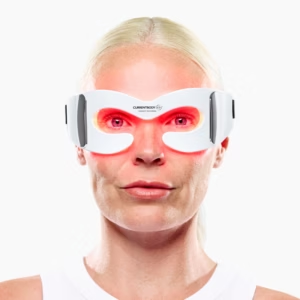
The periorbital zone ages differently from the rest of the face. Thinner skin, reduced subcutaneous fat, and constant mechanical movement from blinking and expression create an environment where collagen depletion accelerates faster than on the cheeks or forehead. The LED Eye Mask is purpose-engineered to address this zone with red and near-infrared light delivered at the proximity and angle required for effective periorbital photobiomodulation. With 135 verified reviews averaging 4.7 stars, it has accumulated strong real-world outcome data for dark circles, fine lines, and periorbital skin quality improvement.
Pros
- Purpose-built for the periorbital zone
- Red and near-infrared wavelengths for targeted collagen stimulation
- Strong verified buyer outcome data
- Pairs well with full-face LED masks for a complete protocol
Cons
- Zone-specific only — does not address the full face
- Entry tier — lower LED count than full-face Clinical devices
Foreo FAQ™ 201
The entry point into Foreo’s clinical LED anti-aging platform, delivering targeted LED wavelengths in the brand’s flexible silicone mask format for users establishing a first LED therapy protocol.

The FAQ™ 201 provides access to Foreo’s LED anti-aging technology at the Entry tier, making it the logical starting point for users new to at-home LED therapy who want a clinically positioned device from a trusted brand. The silicone construction and hands-free wearable format are consistent with the full FAQ™ LED line, ensuring correct mask-to-skin proximity for effective photon delivery.
Pros
- Entry into Foreo’s LED anti-aging platform
- Flexible silicone construction
- Clinical wavelength delivery at an accessible tier
- Hands-free wearable format
Cons
- Entry-level LED output compared to 202 and 202 plus
- Less comprehensive wavelength profile than Performance-tier alternatives
DL-Chosen: The Best LED Mask for Anti-Aging in This Edit
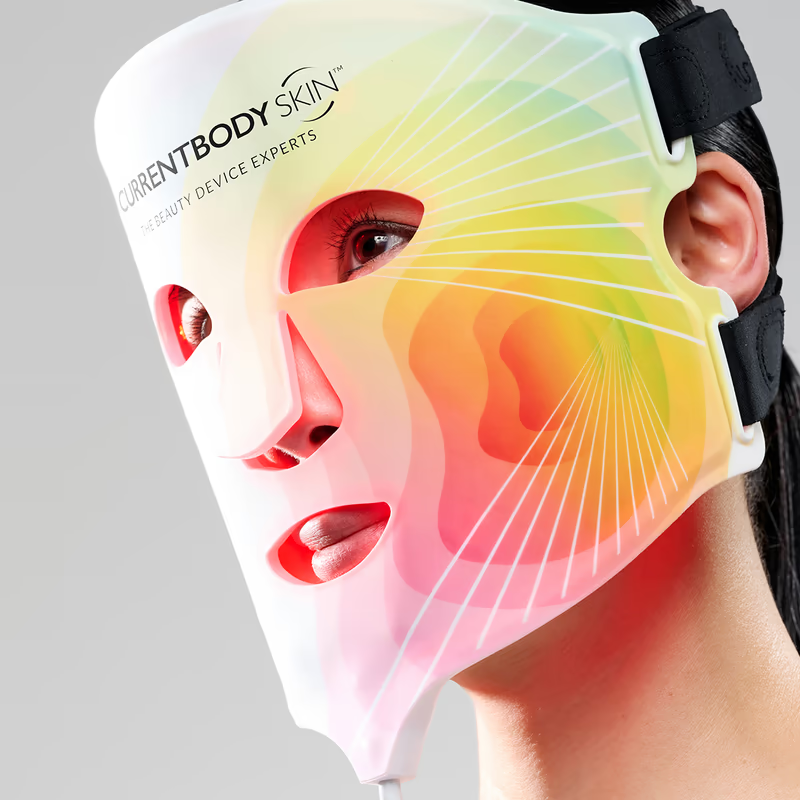
The Lab designates the CurrentBody Skin LED 4-in-1 Zone Facial Mapping Mask as the DL-Chosen pick for this edit. Among all the best LED masks for anti-aging reviewed here, no other device delivers independent multi-wavelength treatment across four precisely mapped facial zones. This is not incremental improvement over conventional full-panel masks — it is a structural rethinking of how LED therapy can be applied to the varied topography and cellular needs of different facial regions.
For the Device Luxe reader targeting real structural outcomes — collagen density, fine line correction, tissue repair — the 4-in-1 represents the ceiling of what LED technology currently delivers at home.
Expert position: Dr. Dendy Engelman, board-certified cosmetic dermatologist at Shafer Clinic Fifth Avenue, has confirmed that at-home LED masks “accelerate collagen production and increase blood circulation, reducing inflammation and signs of aging over time” when used consistently — the precise outcome the 4-in-1’s zone-targeted architecture is engineered to optimize.
Verified buyer: One verified buyer confirms: “The fine lines and wrinkles are diminishing and my skin is looking better every week. The key is to be diligent in its use.”
The DL Standard
The Lab evaluates the best LED masks for anti-aging based on four criteria: wavelength specificity and clinical documentation, LED count and density relative to coverage area, construction quality as it affects mask-to-skin contact and photon delivery efficiency, and verified user outcome data. The best LED masks in this edit carry FDA clearance — regulatory clearance confirms safety parameters and manufacturing rigor, not efficacy, but it is a meaningful baseline. Clinical study data from independent third-party research is weighted more heavily than brand-generated claims. No device in this edit was selected on brand recognition alone.
Best LED Masks Head-to-Head: How They Compare
4-in-1 Zone Mask vs. Multi Light Therapy Mask
Both are Clinical-tier devices from the same brand. The distinction is architectural. The Multi Light Therapy Mask delivers six wavelengths uniformly across the full face — exceptional spectral breadth in a single session. The 4-in-1 delivers multiple wavelengths across four independent zones — precision-targeted treatment that responds to the biological reality that different facial regions have different aging profiles and treatment needs. For users whose primary concern is comprehensive spectral coverage, the Multi Light wins. For users targeting zone-specific precision — heavier concern around the periorbital area, jawline, or forehead independently — the 4-in-1 is the more sophisticated choice. The Lab selects the 4-in-1 for clinical precision; the Multi Light for spectral breadth.
Series 2 Red Light Mask vs. FAQ™ 202 plus
Two Performance-tier red and near-infrared platforms at comparable price points. The Series 2 adds deep near-infrared as a third wavelength, extending penetration depth into dermal tissue. The 202 plus delivers near-infrared and red in a flexible silicone construction from a brand with strong design engineering. The independent 56-day clinical study conducted specifically on the Series 2 provides a level of documented evidence that the 202 plus does not match in equivalent format. For users prioritizing clinical documentation, the Series 2 holds the advantage. For users prioritizing silicone flexibility and Foreo’s brand platform, the 202 plus remains a strong performer. The Lab selects the Series 2 for clinical documentation depth.
DRx SpectraLite FaceWare Pro vs. iRestore LED Face Mask
Both sit in the Performance tier. The SpectraLite FaceWare Pro’s strength is its clinical study data — 97% improvement in fine lines and wrinkles after 10 weeks is among the most specific outcome data available for any at-home LED device. The iRestore’s strength is LED density — 360 LEDs across three wavelengths ensure uniform photon delivery at scale that few competing devices match. For users who prioritize documented clinical outcomes, the SpectraLite leads. For users prioritizing LED coverage density and tri-wavelength versatility, the iRestore is the stronger engineering case. The Lab selects the SpectraLite for clinical outcome data; the iRestore for LED density and wavelength range.
FAQ™ 202 plus vs. FAQ™ 202
A direct generational comparison within the same product family. The 202 plus is the updated, improved current flagship; the 202 is the proven predecessor. Both deliver near-infrared and red light in Foreo’s flexible silicone construction. Unless the 202 is available at a meaningfully lower price point that makes the Performance tier more accessible, the 202 plus is the stronger choice for new buyers entering the Foreo LED platform. The Lab selects the 202 plus for users entering the Foreo ecosystem.
Series 2 Red Light Mask vs. Blue Light Series 2 Mask
Both are Performance-tier devices built on the same Series 2 platform. The Red Light Series 2 delivers red, near-infrared, and deep near-infrared — three wavelengths optimized purely for anti-aging collagen stimulation and dermal repair. The Blue Light Series 2 delivers red and blue — trading the deep near-infrared penetration for surface bacterial control and clarity improvement. For users whose primary concern is structural anti-aging, the Red Light Series 2 is the precise choice. For users managing both aging and clarity concerns simultaneously, the Blue Light Series 2 eliminates the need for separate protocols. The Lab selects by user priority: anti-aging depth goes to Series 2 Red; dual-concern clarity and anti-aging goes to Series 2 Blue.
LED Eye Mask vs. FAQ™ 201
Both occupy the Entry tier. The LED Eye Mask is zone-specific — it targets periorbital aging with precision that no full-face mask can replicate. The FAQ™ 201 covers the full face at the entry point to Foreo’s LED platform. These devices are not direct competitors — they serve different protocol roles. The Eye Mask belongs in a layered protocol alongside a full-face mask; the FAQ™ 201 is a standalone starting device. The Lab recommends the Eye Mask as a protocol complement and the FAQ™ 201 as a standalone entry device.
Which of the Best LED Masks Is Right for You: Decision Guide
Start here if you are new to LED therapy and want a full-face entry device: Foreo FAQ™ 201 delivers clinical LED wavelengths in a hands-free format without the investment of a Performance or Clinical tier device. Establish consistency before upgrading.
Choose the Series 2 Red Light Mask if you want a rigorously documented, three-wavelength anti-aging platform with independent clinical study data specific to women 40–55. This is the evidence-first choice.
Choose the DRx SpectraLite FaceWare Pro if you are managing both aging and acne concerns and want FDA-cleared clinical data with a three-minute daily protocol designed for maximum compliance.
Choose the iRestore LED Face Mask if LED density and tri-wavelength coverage are your primary criteria — 360 LEDs across red, blue, and infrared is a meaningful engineering specification.
Choose the FAQ™ 202 plus if you want Foreo’s current LED flagship with FDA clearance and flexible silicone construction in a near-infrared and red light platform.
Choose the Blue Light Series 2 if you are managing simultaneous aging and clarity concerns and want an FDA-cleared dual-modality solution.
Choose the Multi Light Therapy Mask if spectral breadth is the priority — six wavelengths in a single session is the most comprehensive LED protocol currently available in a home-use mask format.
Choose the DL-Chosen 4-in-1 Zone Mask if you are targeting zone-specific, precision anti-aging outcomes and want the most architecturally advanced LED technology currently available for home use.
Add the LED Eye Mask to any full-face protocol targeting periorbital fine lines, dark circles, or under-eye skin quality — this is the only device in the edit purpose-built for the periorbital zone.
Safety & Protocol: Using the Best LED Masks at Home
Who Should Not Use LED Masks
LED light therapy is contraindicated for individuals with photosensitivity disorders or a history of light-triggered seizures (epilepsy). Users taking medications that cause photosensitivity — including certain antibiotics, chemotherapy agents, and diuretics — should consult a physician before beginning any LED protocol. Avoid use over active skin infections, open wounds, or inflamed skin. Those with genetic conditions of the eye should not use LED masks. St. John’s Wort, coal tar, and certain topical ingredients can also increase photosensitivity and should be avoided during LED therapy.
As Dr. Engelman cautions: “Those who are photosensitive or epileptic should avoid LED therapy masks or consult a healthcare professional before using them.”
Frequency Guidelines
For anti-aging protocols, most dermatologists recommend three to five sessions per week. Dr. Engelman specifies: “Using the device for a minimum of 10 minutes three to five times per week helps minimize inflammation, improve skin tone and texture, and repair skin damage.” Results are cumulative — clinical improvements in fine line depth and skin density are typically visible at the four-to-six-week mark of consistent use, with continued improvement through weeks 8–12.
For blue light acne-targeted protocols, consistent use three to four times per week is the standard clinical recommendation.
Safe Home Use
Always apply LED masks to clean, bare skin. Avoid heavy creams, mineral sunscreens, or opaque topicals prior to treatment — these can scatter or block light and reduce photon delivery efficiency. Hydrogel masks or lightweight serums that do not contain light-blocking ingredients can be used underneath LED masks to enhance absorption. After treatment, apply a hydrating serum or lightweight moisturizer. If treating in the morning, follow with a broad-spectrum SPF — LED therapy does not increase UV sensitivity, but photoprotection remains essential for any anti-aging protocol.
Sanitize LED masks regularly. The mask’s proximity to skin creates conditions where bacteria can transfer. Users with acne-prone skin are particularly advised to clean mask surfaces after every use.
When to Consult a Professional
Consult a board-certified dermatologist before beginning LED therapy if you have any active skin conditions, are currently undergoing treatment with photosensitizing medications, or have a history of eye conditions. If irritation, prolonged redness, or unexpected skin changes occur during a protocol, discontinue use and seek professional assessment. For users targeting significant structural correction — deep rhytids, substantial volume loss, or advanced photoaging — LED therapy functions most effectively as part of a comprehensive protocol that includes in-office treatments. As Dr. Engelman notes, at-home devices “can absolutely work with consistent use” and can extend the results of in-office treatments synergistically.
FAQ
Q: How long does it take to see results from the best LED masks for anti-aging? A: Clinical data and dermatologist guidance consistently point to four to six weeks of regular use (three to five sessions per week) as the threshold for initial visible improvement. Structural changes in collagen density and fine line depth continue to develop through weeks 8–12. Consistency is the primary variable — inconsistent use extends the timeline significantly.
Q: What is the difference between red light and near-infrared light in LED masks? A: Red light (630–660 nm) primarily targets the epidermis and upper dermis, stimulating fibroblast activity and collagen synthesis at the surface level. Near-infrared light (800–850 nm) penetrates deeper into the dermis, reaching the structural layer where long-term collagen remodeling occurs. The best LED masks for anti-aging deliver both wavelengths to address a broader depth range than single-wavelength devices.
Q: Are LED masks safe for all skin tones? A: LED therapy is generally considered safe across all skin types and tones because it does not target melanin the way ablative lasers do. Near-infrared and red wavelengths in particular carry low risk for users with darker skin tones. Blue light, however, carries a small risk of hyperpigmentation for users with melanin-rich skin — users with deeper skin tones are advised to consult a dermatologist before using blue light modalities.
Q: What does FDA-cleared mean for an LED mask? A: FDA clearance means the device has been reviewed by the FDA and determined to pose a low risk to the public based on safety parameters. It confirms manufacturing standards and safety — not clinical efficacy. FDA clearance is a meaningful baseline when choosing the best LED masks, and should be evaluated alongside independent clinical study data for a complete picture of device quality. Learn more about how The Lab evaluates devices at deviceluxe.com.
Q: Can I use an LED mask every day? A: Most clinical protocols and dermatologist recommendations call for three to five sessions per week rather than daily use. Daily use is generally considered safe for most FDA-cleared devices, but the incremental benefit over a consistent three-to-five-session protocol is not clearly documented. Allowing 24–48 hours between sessions gives cellular repair processes time to complete.
Q: Do I need to wear eye protection during LED mask treatment? A: Most LED masks are designed with eye protection built into the mask structure. For devices that do not cover the eyes, protective goggles are recommended, particularly for blue light modalities, which carry higher risk of eye discomfort. Review the device’s specific protocol instructions. Individuals with genetic eye conditions should not use LED masks.
Q: Can LED masks be used after Botox or filler treatments? A: Yes — and dermatologists often recommend it. Red light can help minimize post-procedure swelling and bruising and support tissue healing. The standard guidance is to wait 24–48 hours after injections before resuming LED mask use to allow the injection sites to stabilize.
Q: What skincare ingredients should I avoid using with an LED mask? A: Avoid applying mineral sunscreen, heavy occlusives, or opaque topicals immediately before LED treatment — these can scatter or block light wavelengths. Some dermatologists also recommend avoiding active exfoliants (retinoids, AHAs, BHAs) on the same day as LED mask use if your skin is sensitive. Hydrating serums and lightweight essences are generally compatible.
Q: How do I choose between a red-only and a multi-wavelength LED mask? A: Users with a single primary concern — structural anti-aging and collagen stimulation — are well served by a red and near-infrared LED mask. Users managing multiple simultaneous concerns (aging, clarity, hyperpigmentation, surface texture) benefit from the best LED masks with multi-wavelength capability that address several biological pathways in a single session. Access the Lab organizes devices by technology and concern profile to support this decision.
Q: Is the CurrentBody Skin LED 4-in-1 Zone Facial Mapping Mask worth the Clinical tier investment? A: For users targeting zone-specific, precision anti-aging outcomes, yes. Among all the best LED masks for anti-aging in this edit, no other device delivers independent multi-wavelength treatment across four mapped facial zones. The architecture addresses the biological reality that different facial regions age differently and respond to different treatment intensities. For users who want the most clinically sophisticated LED technology currently available for home use, the 4-in-1 is the unambiguous Clinical-tier choice.
Q: Can I use the LED Eye Mask alongside a full-face LED mask in the same protocol? A: Yes — the LED Eye Mask is specifically designed as a protocol complement to the best LED masks in your routine. Since most full-face masks have limited eye area coverage due to safety design requirements, pairing a full-face device with the dedicated eye mask ensures the periorbital zone receives targeted treatment at the proximity and angle required for effective photobiomodulation. Use the full-face mask first, then apply the eye mask to the periorbital zone for a complete session.
Final Reference Chart
| Device | Tier | The DL Source |
|---|---|---|
| CurrentBody Skin LED 4-in-1 Zone Facial Mapping Mask ★ DL-Chosen | Clinical | Explore |
| CurrentBody Skin LED Multi Light Therapy Mask | Clinical | Explore |
| CurrentBody Skin LED Red Light Therapy Face Mask Series 2 | Performance | Explore |
| Dr. Dennis Gross DRx SpectraLite FaceWare Pro | Performance | Explore |
| iRestore LED Face Mask | Performance | Explore |
| CurrentBody Skin LED Blue Light Therapy Face Mask Series 2 | Performance | Explore |
| Foreo FAQ™ 202 plus | Performance | Explore |
| Foreo FAQ™ 202 | Performance | Explore |
| CurrentBody Skin LED Eye Mask | Entry | Explore |
| Foreo FAQ™ 201 | Entry | Explore |
Coming next: Red Light vs Near-Infrared: Which Works Better for Wrinkles — The Lab breaks down the wavelength science behind the two most clinically validated LED modalities, identifying which delivers superior anti-aging outcomes for women targeting structural skin correction at home.