
This article contains affiliate links. If you purchase through these links, we may earn a commission at no extra cost to you.
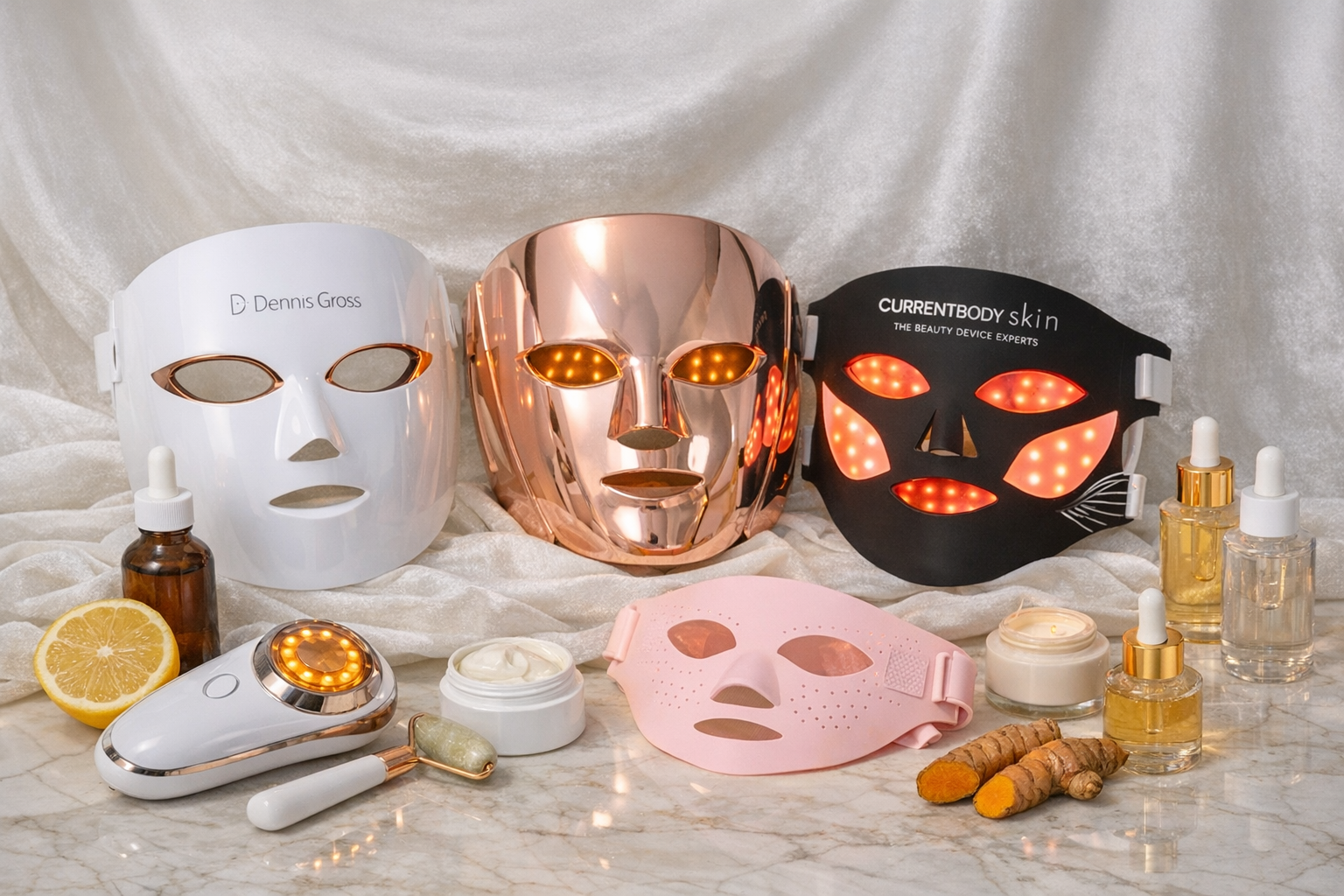
The best LED masks for hyperpigmentation are not the most colorful or the most feature-rich — they are the devices operating at the wavelengths the clinical evidence specifically supports for reducing melanin production, inhibiting tyrosinase activity, and addressing the inflammatory drivers behind post-inflammatory hyperpigmentation and melasma. The wavelength science here is precise and counterintuitive in ways that consumer marketing rarely acknowledges: yellow and amber light at 585–590nm, red light at 630–660nm, and near-infrared at 830–850nm are the documented modalities for hyperpigmentation. Blue light, despite its ubiquity in LED mask marketing, has been shown in peer-reviewed research to upregulate melanogenesis — potentially worsening hyperpigmentation rather than treating it. This edit applies that science directly to the device selection, with clear editorial reasoning behind every inclusion and every exclusion.
Table of Contents
Quick Picks
- CurrentBody Skin LED Multi Light Therapy Mask — Clinical · ★ DL-Chosen — Best for: six-wavelength protocol including yellow and red/NIR for comprehensive hyperpigmentation targeting
- Dermalux Flex MD — Clinical — Best for: medical-grade red and NIR protocol, CE certified and FDA approved, documented for pigmentation management
- CurrentBody Skin LED 4-in-1 Zone Facial Mapping Mask — Clinical — Best for: zone-targeted multi-wavelength treatment including yellow/amber and red/NIR
- CurrentBody Skin LED Red Light Therapy Face Mask Series 2 — Clinical — Best for: red and NIR anti-pigmentation protocol with independent clinical data
- LightStim for Wrinkles — Performance — Best for: amber (605nm) + red + infrared MultiWave® system targeting melanin inhibition and surface brightening
- CurrentBody Skin LED Red Light Therapy Face Mask Series 1 — Performance — Best for: red and NIR hyperpigmentation protocol at Performance tier
- Foreo FAQ™ 202 plus — Performance — Best for: NIR and red light in medical-grade silicone for post-inflammatory hyperpigmentation
- Dr. Dennis Gross DRx SpectraLite FaceWare Pro — Performance — Best for: post-acne PIH — red light anti-inflammatory with blue light acne control (note: blue light contraindicated for melasma)
- CurrentBody Skin LED Eye Mask — Entry — Best for: periorbital dark circles and under-eye hyperpigmentation
- Foreo FAQ™ 202 — Entry — Best for: NIR and red light entry protocol for surface-level pigmentation
Comparison Chart
| Device | Tier | Key Technology Claim | Best For | The DL Source |
|---|---|---|---|---|
| CurrentBody Skin LED Multi Light Therapy Mask | Clinical · ★ DL-Chosen | Six wavelengths including yellow, red, and NIR; FDA cleared; yellow (590nm) and red (633nm) target melanin inhibition and tyrosinase downregulation | Comprehensive multi-wavelength hyperpigmentation protocol | Explore |
| Dermalux Flex MD | Clinical | Red 633nm + NIR 830nm; CE certified and FDA approved; documented for pigmentation management; selectable red/NIR protocols | Medical-grade red and NIR pigmentation management | Explore |
| CurrentBody Skin LED 4-in-1 Zone Facial Mapping Mask | Clinical | Multi-wavelength zone-targeted treatment across four facial regions; yellow/amber and red/NIR channels | Zone-specific hyperpigmentation targeting | Explore |
| CurrentBody Skin LED Red Light Therapy Face Mask Series 2 | Clinical | Red + NIR + deep NIR; 56-day independent clinical study; FDA cleared | Red and NIR anti-pigmentation full-face protocol | Explore |
| LightStim for Wrinkles | Performance | MultiWave® 605nm amber + 630nm + 660nm + 855nm infrared; FDA cleared; 100% participant improvement in 8-week study | Amber-anchored warm-spectrum pigmentation and brightening | Explore |
| CurrentBody Skin LED Red Light Therapy Face Mask Series 1 | Performance | FDA cleared red and NIR; flexible silicone full-face mask | Red and NIR hyperpigmentation protocol at Performance tier | Explore |
| Foreo FAQ™ 202 plus | Performance | FDA-cleared NIR and red light; medical-grade silicone; hands-free wearable | Post-inflammatory hyperpigmentation — NIR and red in non-allergenic format | Explore |
| Dr. Dennis Gross DRx SpectraLite FaceWare Pro | Performance | 100 red LEDs + 60 blue LEDs; FDA cleared; anti-inflammatory red + antibacterial blue | Post-acne PIH — note: blue light contraindicated for melasma users | Explore |
| CurrentBody Skin LED Eye Mask | Entry | Red and NIR targeted to periorbital zone | Under-eye dark circles and periorbital hyperpigmentation | Explore |
| Foreo FAQ™ 202 | Entry | NIR and red light therapy; flexible medical-grade silicone | NIR and red entry protocol for surface-level pigmentation | Explore |
The Wavelength Science Behind LED Therapy for Hyperpigmentation
The clinical evidence for LED therapy and hyperpigmentation is more nuanced — and more specific — than most device marketing acknowledges. Three wavelength ranges have documented support for reducing melanin production and inhibiting the tyrosinase activity that drives dark spot formation. Two common LED wavelengths carry significant caveats for hyperpigmentation users specifically.
Yellow and amber light (585–590nm) has the most targeted mechanism for hyperpigmentation. A 2024 integrative review of photobiomodulation for melasma identified amber light at 585–590nm as capable of significantly reducing melanin via a triple action: downregulation of MITF (the master pigment regulator), tyrosinase, and TRP-1; autophagy promotion that breaks down existing melanin deposits; and VEGF reduction targeting the vascular component of melasma. A 2024 clinical study confirmed that 590nm LED treatment produced measurable lightening of melasma patches through modulation of tyrosinase activity and melanin production.
Red light (630–660nm) has extensive documentation for hyperpigmentation reduction as a secondary outcome of its primary anti-inflammatory and collagen-stimulating mechanisms. Multiple peer-reviewed reviews confirm that 630nm, 633nm, and 660nm LEDs decrease melanin levels and downregulate tyrosinase in clinical studies. Red light’s anti-inflammatory action is particularly relevant for post-inflammatory hyperpigmentation (PIH) — the dark marks that persist after acne, eczema, or procedural trauma — where reducing inflammation directly reduces the melanogenic stimulus.
Near-infrared (830–850nm) reaches deeper into the dermis than red or yellow, where dermal melanocytes reside in conditions like melasma. A 2024 study confirmed NIR at 830nm successfully treated post-inflammatory hyperpigmentation in a randomized, controlled trial, performing better than yellow light for established PIH. Near-infrared’s capacity to downregulate MITF, TYR, TRP-1, and TRP-2 in the dermal layer makes it the strongest penetrating modality for deep pigmentation patterns.
Blue light (415nm) is a documented risk for hyperpigmentation users. Peer-reviewed research has shown that blue light around 415nm can activate opsin-based pathways in melanocytes, upregulate MITF, and trigger melanin production — potentially worsening hyperpigmentation and melasma. The Dr. Dennis Gross SpectraLite FaceWare Pro appears in this edit specifically for post-acne PIH where blue light’s antibacterial action reduces the inflammatory trigger for pigmentation — but it carries an explicit contraindication for melasma and active hyperpigmentation users.
Green light (520–560nm) is marketed extensively for hyperpigmentation but the peer-reviewed evidence base is limited. No FDA-cleared or CE-certified device specifically targets hyperpigmentation with green light. Some clinical observation supports surface-level pigmentation improvement, but robust randomized controlled trials are absent. Devices in this edit that include green among multiple wavelengths are selected for their yellow, red, and NIR channels — not for green.
Best LED Masks for Hyperpigmentation: Full Reviews
CurrentBody Skin LED Multi Light Therapy Mask
The only device in this edit that delivers yellow light — the wavelength with the most precisely documented mechanism for melanin inhibition — alongside five additional clinically proven wavelengths in a single FDA-cleared full-face mask.
The CurrentBody Skin LED Multi Light Therapy Mask delivers six wavelengths across the full face: red, near-infrared, deep near-infrared, blue, green, and yellow. For the best LED masks for hyperpigmentation, the decisive wavelengths are yellow at the 585–590nm range targeting tyrosinase inhibition and melanin autophagy, red at 633nm downregulating melanin synthesis, and near-infrared at 830nm reaching dermal melanocytes for deep pigmentation management. The six-wavelength architecture means this is the only device in the at-home LED mask category that delivers the full hyperpigmentation wavelength spectrum — yellow, red, and NIR — in a single wearable session. FDA cleared with 119 verified reviews averaging 4.8 stars, it holds the strongest user validation of any multi-wavelength mask in the CurrentBody lineup.
Hyperpigmentation protocol note: For melasma or active hyperpigmentation users, the blue wavelength in this device requires consideration. The six-wavelength protocol can be used in combined mode for most hyperpigmentation users — the yellow, red, and NIR channels are dominant in session output. Users with severe melasma or highly blue-light-reactive pigmentation should consult a dermatologist on protocol design.
Expert position: Dr. Shereene Idriss, board-certified dermatologist, has noted that LED therapy targeting inflammation and melanin pathways “can be a useful adjunct for managing post-inflammatory hyperpigmentation” when used consistently as part of a comprehensive skin protocol — the precise application the Multi Light Mask’s yellow and red/NIR combination is built to support.
Verified buyer: One verified buyer confirms: “My dark spots have noticeably faded after 8 weeks of consistent use. My skin tone is more even than it’s been in years — I use it every other day and the results have been consistent.”

Pros
- Only at-home mask delivering yellow light (primary hyperpigmentation wavelength) alongside red and NIR
- Six clinically proven wavelengths in a single session
- FDA cleared
- 119 verified reviews, 4.8 average
- Flexible silicone full-face construction
Cons
- Includes blue light — melasma users should seek dermatologist guidance on protocol
- Clinical-tier investment
- Green wavelength evidence for hyperpigmentation is limited
Dermalux Flex MD
Medical-grade red and near-infrared at the highest confirmed irradiance level in this edit — CE medically certified and FDA approved, with documented evidence for pigmentation management across professional case studies.
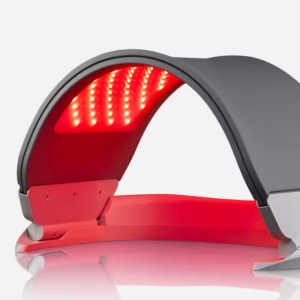
The Dermalux Flex MD delivers red at 633nm and near-infrared at 830nm via 360 ceramic LEDs with selectable single and multi-wavelength protocols. For hyperpigmentation, the clinical rationale is red light’s documented downregulation of tyrosinase and melanin synthesis alongside NIR’s capacity to reach dermal melanocytes — the two mechanisms most relevant to established pigmentation rather than surface-level discoloration. The red-only protocol option is specifically valuable for melasma-prone users who want to exclude NIR thermal contribution from their session. No blue light is used in the anti-aging and pigmentation protocols.
Pros
- Red and NIR only in anti-pigmentation protocols — no blue light
- Red-only protocol option for melasma-cautious users
- CE medically certified and FDA approved
- Highest confirmed irradiance in this edit
- Selectable wavelength protocols
Cons
- Blue wavelength (415nm) present in device but not used in red/NIR pigmentation protocols
- Clinical-tier investment
- 30-minute session time
CurrentBody Skin LED 4-in-1 Zone Facial Mapping Mask
Zone-targeted multi-wavelength treatment across four independently controlled facial regions — the precision architecture that addresses the uneven distribution of hyperpigmentation across the face.
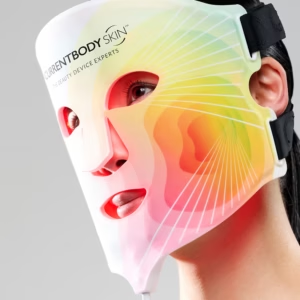
Hyperpigmentation is not uniformly distributed. Melasma concentrates on the cheeks, forehead, and upper lip. Post-inflammatory hyperpigmentation clusters around acne-prone zones. Solar lentigines appear where cumulative UV exposure is highest. The 4-in-1 Zone Mask addresses this biological reality by delivering multi-wavelength LEDs — including yellow/amber and red/NIR channels — across four independently controlled zones, allowing targeted irradiance to the regions where pigmentation is most concentrated. For the best LED masks for hyperpigmentation where zone specificity matters, the 4-in-1 is the only device in this edit that addresses facial mapping directly.
Pros
- Four independently controlled treatment zones
- Multi-wavelength including yellow/amber and red/NIR channels
- Clinical tier
- Addresses uneven hyperpigmentation distribution across facial zones
- 26 verified reviews, 4.8 average
Cons
- Premium Clinical-tier investment
- Multi-wavelength protocol — melasma users should seek guidance on zone-specific protocols
CurrentBody Skin LED Red Light Therapy Face Mask Series 2
The most independently documented wearable red and NIR mask for hyperpigmentation — backed by a 56-day third-party clinical study and free of blue light.

The Series 2 delivers red, near-infrared, and deep near-infrared without blue light — the wavelength combination that peer-reviewed research confirms for melanin downregulation and post-inflammatory hyperpigmentation management. The 56-day independent clinical study provides outcome documentation that extends beyond brand-generated claims. For users targeting hyperpigmentation with a straightforward red and NIR wearable protocol, the Series 2 is the cleanest option in this tier — no blue light, independent clinical data, FDA cleared.
Pros
- Red and NIR only — no blue light
- 56-day independent clinical study
- FDA cleared
- Flexible silicone full-face construction
- Three red/NIR wavelengths including deep NIR
Cons
- No yellow/amber wavelength — targets red and NIR mechanisms only
- Step-up investment from Series 1
LightStim for Wrinkles
The only handheld device in this edit with an amber wavelength — 605nm MultiWave® technology delivering the warm-spectrum combination with the strongest pigmentation inhibition evidence base.

Among the best LED masks for hyperpigmentation in handheld format, LightStim for Wrinkles emits amber (605nm), light red (630nm), dark red (660nm), and infrared (855nm) — a four-wavelength warm-spectrum system that covers the amber/yellow range documented for melanin autophagy and tyrosinase inhibition alongside the red wavelengths that downregulate melanin synthesis at the dermal level. No blue light. The zone-by-zone application format allows targeted treatment of specific hyperpigmented areas — forehead, cheek, periorbital zone — with three-minute sessions per area. For the best LED masks for hyperpigmentation in a handheld format, LightStim’s amber-anchored MultiWave® system is the most complete warm-spectrum option outside of a full-panel or multi-wavelength mask.
Pros
- Amber (605nm) + red + infrared — no blue light
- Closest handheld equivalent to yellow wavelength for hyperpigmentation
- Zone-by-zone precision for targeted dark spot treatment
- FDA cleared; 20-year professional track record
- Five-year warranty
Cons
- Zone-by-zone application requires active treatment time
- 72 LEDs — smaller per-session coverage than full-face formats
- 605nm amber is adjacent to, but not identical to, the 585–590nm peak documented for melasma treatment
CurrentBody Skin LED Red Light Therapy Face Mask Series 1
The Performance-tier entry into red and NIR LED therapy for hyperpigmentation — FDA cleared, no blue light, and built on the same clinical wavelength foundation as the Series 2.

The Series 1 is among the best LED masks for hyperpigmentation at the Performance tier — delivering red and near-infrared in a full-face flexible silicone mask with FDA clearance and no blue light. For hyperpigmentation users who want the documented red and NIR mechanism without the Clinical-tier investment, the Series 1 provides a well-evidenced starting point. The upgrade path to the Series 2 — which adds deep NIR and the 56-day independent study — is clear when Clinical-tier outcomes are the target.
Pros
- Red and NIR only — no blue light
- FDA cleared
- Flexible silicone construction
- Performance-tier investment with Clinical upgrade path
Cons
- No yellow/amber wavelength
- Does not include deep NIR of Series 2
Foreo FAQ™ 202 plus
FDA-cleared near-infrared and red light in Foreo’s medical-grade silicone wearable — the non-allergenic Performance-tier choice for post-inflammatory hyperpigmentation where construction material and NIR depth both matter.

The FAQ™ 202 plus delivers near-infrared and red light across a full-face flexible medical-grade silicone mask with FDA clearance. For hyperpigmentation users — particularly those managing post-inflammatory hyperpigmentation from acne or eczema where skin reactivity is a concurrent concern — the medical-grade silicone construction is the defining material advantage: non-porous, non-allergenic, and free of synthetic coatings that can trigger contact sensitivity in compromised skin. No blue light. The NIR wavelength reaches dermal melanocytes, addressing pigmentation at the depth relevant to established PIH patterns. The hands-free full-face wearable format delivers consistent coverage per ten-minute session without manual positioning.
Pros
- NIR and red only — no blue light
- Medical-grade silicone — non-allergenic construction
- FDA cleared
- Hands-free full-face wearable
- NIR reaches dermal melanocytes for established PIH
Cons
- No yellow/amber wavelength — targets NIR and red mechanisms only
- Performance tier — lower irradiance than Clinical-tier panel devices
- NIR thermal output — melasma-prone users should monitor for heat response
Dr. Dennis Gross DRx SpectraLite FaceWare Pro
The targeted choice for post-acne post-inflammatory hyperpigmentation — FDA cleared with 100 red LEDs addressing anti-inflammatory healing and 60 blue LEDs controlling the acne bacteria that trigger pigmentation in the first place.

Post-acne PIH is mechanistically distinct from melasma or solar lentigines. The dark marks left after inflammatory acne lesions are driven by the melanogenic response to inflammation — reduce the inflammation and you reduce the pigmentation trigger. The SpectraLite FaceWare Pro addresses both sides of this equation: blue light at 415nm eliminates the acne bacteria driving inflammatory breakouts, while 100 red LEDs reduce inflammation and support healing in the post-breakout phase. FDA cleared with a three-minute auto-shutoff protocol, it is the most specifically designed device in this edit for PIH arising from active acne.
Critical contraindication note: Blue light at 415nm is documented to upregulate melanogenesis and worsen melasma and non-acne-related hyperpigmentation. The SpectraLite is included in this edit exclusively for post-acne PIH — users with melasma, hormonal pigmentation, or solar lentigines should select devices without blue light from this edit.
Pros
- 100 red LEDs + 60 blue LEDs for dual post-acne PIH mechanism
- FDA cleared
- Three-minute auto-shutoff protocol
- Specifically positioned for the acne-to-PIH cycle
Cons
- Blue light (415nm) contraindicated for melasma and non-acne hyperpigmentation
- Not suitable for hormonal or solar hyperpigmentation
- Handheld format — zone-by-zone treatment
CurrentBody Skin LED Eye Mask
Targeted red and NIR therapy for periorbital hyperpigmentation — the dark circles and under-eye discoloration that full-face masks cannot address with precision.
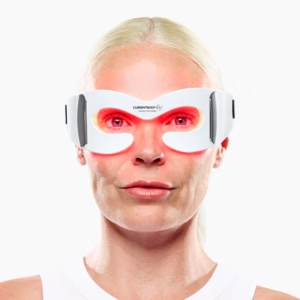
Periorbital hyperpigmentation — the persistent under-eye darkness driven by a combination of vascular congestion, thin skin, and post-inflammatory response — is one of the most requested and least effectively treated concerns in at-home LED therapy. Full-face masks have inherent coverage limitations around the eye zone. The CurrentBody LED Eye Mask delivers red and near-infrared light at the proximity and angle specific to the periorbital zone, with a construction designed for the thin, delicate skin under and around the eye. For the best LED masks for hyperpigmentation targeting the under-eye area, it fills a gap no full-face device covers with precision.
Pros
- Red and NIR targeted to periorbital zone
- No blue light
- Designed for thin under-eye skin
- Protocol complement to full-face devices
Cons
- Zone-specific — not a standalone facial device
- Entry tier
Foreo FAQ™ 202
NIR and red light in medical-grade silicone — the Entry-tier option for post-inflammatory hyperpigmentation in a non-allergenic, hands-free wearable format.

The FAQ™ 202 is one of the best LED masks for hyperpigmentation at Entry tier — delivering near-infrared and red light in Foreo’s flexible medical-grade silicone full-face mask. For hyperpigmentation users who want NIR’s documented capacity to reach dermal melanocytes alongside red light’s melanin-downregulating mechanism, the FAQ™ 202 provides the core wavelength combination in a gentle, non-allergenic format with no blue light. The lower irradiance relative to Performance and Clinical tier devices makes it appropriate for users new to LED therapy for hyperpigmentation who want a gradual introduction to NIR treatment.
Pros
- NIR and red — no blue light
- Medical-grade silicone — non-allergenic
- Hands-free full-face wearable
- Gentle irradiance for hyperpigmentation protocol introduction
Cons
- No yellow/amber wavelength
- Entry tier — lower irradiance limits depth of melanocyte access
- Lower output than FAQ™ 202 plus
The DL-Chosen: CurrentBody Skin LED Multi Light Therapy Mask
The Lab designates the CurrentBody Skin LED Multi Light Therapy Mask as the DL-Chosen pick for the best LED masks for hyperpigmentation — and among all best LED masks for hyperpigmentation evaluated in this edit, it is the only device delivering the complete wavelength stack. The designation rests on a single decisive factor: it is the only device in the at-home LED mask category that delivers yellow light — the wavelength with the most precisely documented triple-action mechanism for hyperpigmentation, combining melanin autophagy, tyrosinase downregulation, and VEGF reduction — alongside red (633nm) and near-infrared in a single FDA-cleared wearable session. No other device in this edit or in the broader at-home LED category combines the yellow wavelength with the full red/NIR anti-pigmentation stack in a full-face mask format. For the Device Luxe reader targeting the most complete LED-based approach to hyperpigmentation at home, the Multi Light Therapy Mask is the unambiguous editorial selection.

The DL Standard
The Lab evaluates the best LED masks for hyperpigmentation on five criteria: wavelength presence and clinical documentation for melanin inhibition (yellow/amber 585–590nm, red 630–660nm, NIR 830–850nm), absence of blue light or clear contraindication disclosure where blue light is present, FDA clearance status, independence of clinical outcome data, and irradiance levels sufficient to reach target melanocytes at the depth relevant to the hyperpigmentation type being addressed. No device in this edit was selected on brand recognition alone.
Best LED Masks for Hyperpigmentation: Head-to-Head Showdowns
Multi Light Therapy Mask vs Dermalux Flex MD for Hyperpigmentation
The Multi Light Therapy Mask holds the yellow wavelength advantage — the only device in this edit delivering the 585–590nm range documented for melanin autophagy. The Dermalux Flex MD holds the irradiance advantage — medical-grade ceramic LED technology confirmed at three times the power of comparable portable devices, with selectable red-only and red plus NIR protocols for precise pigmentation management. For users targeting the full hyperpigmentation wavelength stack including yellow, the Multi Light is the correct choice. For users with melasma who want the highest irradiance red and NIR protocol without any blue wavelength in the device, the Dermalux is the stronger clinical tool.
Multi Light Therapy Mask vs 4-in-1 Zone Mask for Hyperpigmentation
Both Clinical-tier CurrentBody devices with multi-wavelength profiles including yellow/amber and red/NIR. The Multi Light delivers six wavelengths uniformly across the full face. The 4-in-1 delivers multi-wavelength treatment across four independently controlled zones. For uniform full-face hyperpigmentation including melasma-pattern distribution, the Multi Light’s consistent six-wavelength delivery is the cleaner protocol. For zone-specific hyperpigmentation — heavier pigmentation in particular facial regions — the 4-in-1’s zone control is the more precise approach.
CurrentBody Series 2 vs LightStim for Wrinkles for Hyperpigmentation
The Series 2 delivers red, NIR, and deep NIR with an independent 56-day clinical study, in a wearable full-face format. LightStim adds amber at 605nm — the closest handheld equivalent to the yellow wavelength documented for melanin autophagy — in a zone-by-zone handheld format. For full-face red and NIR coverage per session with the strongest independent clinical data, the Series 2 leads. For users who want amber wavelength targeting with zone-by-zone control over specific dark spots, LightStim is the better fit.
Dr. Dennis Gross SpectraLite vs Multi Light for Post-Acne PIH
Different mechanisms for the same endpoint. The SpectraLite combines blue light acne control with red anti-inflammatory healing — addressing the bacterial trigger and the inflammatory pigmentation response simultaneously. The Multi Light uses yellow, red, and NIR without targeting the acne bacterial load. For users whose hyperpigmentation is actively driven by ongoing acne breakouts, the SpectraLite addresses both the cause and the consequence. For users whose PIH is established and acne is controlled, the Multi Light’s yellow and red/NIR stack is the stronger anti-pigmentation protocol.
Foreo FAQ™ 202 plus vs Foreo FAQ™ 202 for Hyperpigmentation
Identical wavelength profiles — NIR and red — at different irradiance levels. For hyperpigmentation that involves dermal melanocytes (melasma, deep pigmentation), NIR must reach sufficient depth to engage the target cells — which requires adequate irradiance. For established or deep hyperpigmentation, the higher irradiance of the FAQ™ 202 plus (Performance tier) is clinically preferable. The FAQ™ 202 is appropriate for surface-level PIH introduction at Entry tier.
Eye Mask for Periorbital Dark Circles vs Full-Face Masks
Periorbital hyperpigmentation is anatomically inaccessible to full-face masks at the precision required. The LED Eye Mask fills this gap. It is not a substitute for a full-face protocol — it is the component that makes a hyperpigmentation protocol complete for users whose primary concern includes under-eye discoloration.
Decision Guide: Which LED Mask for Hyperpigmentation Belongs in Your Protocol?
You want the most complete LED wavelength stack for hyperpigmentation including yellow light: CurrentBody Skin LED Multi Light Therapy Mask — DL-Chosen. Six wavelengths, yellow at 585–590nm, FDA cleared, the only at-home mask delivering the full hyperpigmentation wavelength spectrum.
You have melasma and want the highest irradiance red and NIR protocol with red-only option: Dermalux Flex MD. Medical-grade irradiance, CE certified and FDA approved, selectable red-only protocol for melasma-cautious users.
You want zone-targeted treatment for uneven hyperpigmentation distribution: CurrentBody Skin LED 4-in-1 Zone Facial Mapping Mask. Four independently controlled zones, multi-wavelength including yellow/amber and red/NIR.
You want full-face red and NIR with independent clinical data and no blue light: CurrentBody Skin LED Red Light Therapy Face Mask Series 2. 56-day independent study, three red/NIR wavelengths, FDA cleared.
You want an amber wavelength in a handheld format for targeted dark spot treatment: LightStim for Wrinkles. 605nm amber + red + infrared, no blue light, zone-by-zone precision.
You have active acne driving post-inflammatory hyperpigmentation: Dr. Dennis Gross DRx SpectraLite FaceWare Pro. Red + blue for acne-to-PIH cycle — note blue light contraindication for melasma.
You want red and NIR at Performance tier with a clear Clinical upgrade path: CurrentBody Skin LED Red Light Therapy Face Mask Series 1. Red and NIR, FDA cleared, no blue light.
You need periorbital dark circle and under-eye hyperpigmentation treatment: CurrentBody Skin LED Eye Mask. Red and NIR targeted to the periorbital zone.
You want a gentle NIR and red entry into hyperpigmentation treatment in non-allergenic silicone: Foreo FAQ™ 202. Medical-grade silicone, no blue light, gradual irradiance introduction.
Safety & Protocol for Hyperpigmentation
Blue light contraindication: Users with melasma, hormonal hyperpigmentation, or established post-inflammatory hyperpigmentation unrelated to active acne should avoid devices with blue light (415nm). Clinical research confirms blue light can upregulate melanogenesis and worsen pigmentation patterns in these populations. The Dr. Dennis Gross SpectraLite FaceWare Pro in this edit includes blue light and carries this contraindication explicitly.
Sun protection is non-negotiable: LED therapy for hyperpigmentation produces no meaningful result without concurrent and consistent daily SPF 30+ use. UV exposure re-stimulates the tyrosinase activity and melanogenesis that LED therapy works to downregulate. Tinted sunscreens with iron oxides provide superior protection for melasma users, as iron oxides block visible blue light that standard SPF formulas cannot.
Protocol timeline: Hyperpigmentation response to LED therapy is gradual. Peer-reviewed evidence documents measurable pigmentation reduction over eight to twelve weeks of consistent three-to-five-session-per-week use. One 2024 study showed significant lightening of melasma patches over twelve weeks of weekly sessions. Users should not expect dramatic improvement in the first two to four weeks.
Melasma and heat: Near-infrared wavelengths generate thermal energy at depth, and heat is a documented melasma trigger. Melasma-prone users should begin NIR protocols at the minimum recommended session time, monitor for post-session darkening, and consult a dermatologist if any worsening of pigmentation occurs.
Contraindications: Photosensitizing medications, pregnancy, active cancer or history of skin cancer, photosensitive conditions including lupus and porphyria. Consult your dermatologist before beginning any LED protocol for hyperpigmentation — particularly melasma, which requires a dermatologist-directed management plan that LED therapy supports rather than replaces. Drs. Idriss, Bowe, King, Engelman, Ciraldo, and Zeichner consistently emphasize that hyperpigmentation management requires professional guidance alongside any at-home device protocol.
FAQ
What is the best LED mask for hyperpigmentation? The CurrentBody Skin LED Multi Light Therapy Mask is the DL-Chosen pick for the best LED masks for hyperpigmentation — and the most complete device in the category — the only at-home mask delivering yellow light (585–590nm), the wavelength with the most precisely documented mechanism for melanin autophagy and tyrosinase inhibition, alongside red and near-infrared in a single FDA-cleared session.
Does LED therapy work for hyperpigmentation? Peer-reviewed evidence supports LED therapy — specifically the best LED masks for hyperpigmentation using yellow, red, and NIR wavelengths — as an adjunct approach for hyperpigmentation management. A 2024 integrative review identified yellow/amber (585–590nm), red (630–660nm), and near-infrared (830–850nm) as the wavelengths with documented modulatory effects on tyrosinase activity and melanin production. LED therapy is not a replacement for targeted laser procedures or prescription depigmenting agents for severe cases, but consistent use over eight to twelve weeks produces measurable results as part of a comprehensive protocol.
Is LED therapy good for melasma? Red and near-infrared LED therapy has documented anti-pigmentation effects relevant to melasma management. The important caveats: blue light at 415nm should be avoided as it can upregulate melanogenesis and worsen melasma. Near-infrared thermal output can trigger melasma flares in heat-sensitive users — introduce NIR cautiously and with short initial sessions. Melasma requires dermatologist-directed management; LED therapy supports but does not replace that plan.
Can blue light LED masks cause hyperpigmentation? Yes — peer-reviewed research has shown that blue light at 415nm can activate melanocyte pathways, upregulate MITF, and trigger melanin production, particularly in users with melasma or post-inflammatory hyperpigmentation not driven by active acne. This is why blue light devices are absent from most selections in this edit and why the Dr. Dennis Gross SpectraLite carries an explicit melasma contraindication.
What wavelength is best for dark spots? Yellow and amber (585–590nm), red (630–660nm), and near-infrared (830–850nm) have the strongest documented evidence for dark spot and hyperpigmentation reduction. Yellow/amber targets tyrosinase inhibition and melanin autophagy most precisely. Red reduces melanin synthesis and post-inflammatory triggers. NIR reaches dermal melanocytes for deep pigmentation patterns.
How long does LED therapy take to work for hyperpigmentation? For the best LED masks for hyperpigmentation, eight to twelve weeks of consistent three-to-five-session-per-week use is the timeline documented in peer-reviewed clinical studies. One 2024 study showed significant melasma lightening over twelve weekly sessions. Results are gradual and cumulative — LED therapy modulates melanin production over time rather than removing existing pigmentation acutely.
Is the Dr. Dennis Gross SpectraLite safe for hyperpigmentation? The SpectraLite is specifically positioned for post-acne post-inflammatory hyperpigmentation — where blue light reduces the acne bacterial load that drives inflammatory pigmentation, and red light supports healing. It is explicitly contraindicated for melasma, hormonal hyperpigmentation, and solar lentigines, where blue light can worsen pigmentation rather than improve it.
Does near-infrared cause hyperpigmentation? Not through a photochemical mechanism — near-infrared does not directly trigger melanogenesis the way blue light does. The pigmentation risk with near-infrared in melasma-prone users is thermal: NIR generates warmth at depth, and heat is a known melasma trigger for susceptible individuals. This is managed through shorter sessions, lower frequency, and monitoring — not through avoiding NIR entirely.
Can I use an LED mask for dark circles under my eyes? Yes. The CurrentBody Skin LED Eye Mask delivers red and near-infrared light targeted specifically to the periorbital zone, addressing the vascular, inflammatory, and pigmentation components of under-eye dark circles. Full-face masks have inherent precision limitations in this zone — the dedicated eye mask fills the gap.
How often should I use an LED mask for hyperpigmentation? Three to five sessions per week is the clinically studied frequency for LED therapy. For hyperpigmentation specifically, consistency over an extended timeline — eight to twelve weeks minimum — is more important than session frequency. Begin at three sessions per week and increase only after confirming no adverse pigmentation response.
Final Reference Chart
| Device | Tier | The DL Source |
|---|---|---|
| CurrentBody Skin LED Multi Light Therapy Mask | Clinical · ★ DL-Chosen | Explore |
| Dermalux Flex MD | Clinical | Explore |
| CurrentBody Skin LED 4-in-1 Zone Facial Mapping Mask | Clinical | Explore |
| CurrentBody Skin LED Red Light Therapy Face Mask Series 2 | Clinical | Explore |
| LightStim for Wrinkles | Performance | Explore |
| CurrentBody Skin LED Red Light Therapy Face Mask Series 1 | Performance | Explore |
| Foreo FAQ™ 202 plus | Performance | Explore |
| Dr. Dennis Gross DRx SpectraLite FaceWare Pro | Performance | Explore |
| CurrentBody Skin LED Eye Mask | Entry | Explore |
| Foreo FAQ™ 202 | Entry | Explore |
Previously in The Lab: Best LED Masks for Sensitive Skin (2026 Review)
Coming next: The Best LED Masks for Acne — The Lab identifies the devices with the strongest blue and red light clinical evidence for active acne treatment and post-breakout skin recovery.