
This article contains affiliate links. If you purchase through these links, we may earn a commission at no extra cost to you.
The best red light and near-infrared LED masks occupy a distinct category within at-home LED therapy — devices engineered specifically around the wavelengths with the strongest clinical evidence for structural anti-aging outcomes. Where multi-wavelength masks address a broad range of skin concerns, red light and near-infrared masks concentrate their photon delivery on collagen stimulation, dermal repair, and deep tissue regeneration. The science is precise and the clinical data is substantial. This edit curates the devices that deliver on that science at home, from targeted panel systems to flexible wearable masks, across every tier of the category.
Quick Picks
- Dermalux Flex MD — Clinical · ★ DL-Chosen — Best for: professional-grade red and near-infrared phototherapy at home, full face and body
- CurrentBody Skin LED Red Light Therapy Face Mask Series 2 — Clinical — Best for: red and near-infrared anti-aging protocol with independent clinical study data
- CurrentBody Skin LED Red Light Therapy Face Mask Series 1 — Performance — Best for: proven red light anti-aging entry into the CurrentBody platform
- CurrentBody Skin LED Neck & Décolletage Mask Series 2 — Performance — Best for: red and near-infrared treatment for neck and chest anti-aging
- LightStim for Wrinkles — Performance — Best for: FDA-cleared MultiWave red and infrared handheld protocol with 20-year clinical track record
- Foreo FAQ™ 202 plus — Performance — Best for: flexible silicone red and NIR wearable mask for consistent protocol use
- Foreo FAQ™ 202 — Performance — Best for: near-infrared and red light therapy in Foreo’s wearable format
- CurrentBody Skin LED Eye Mask — Entry — Best for: targeted red and near-infrared treatment for the periorbital zone
- Foreo FAQ™ 201 — Entry — Best for: entry-level clinical wavelength red light therapy
Table of Contents
Comparison Chart
| Device | Tier | Key Technology Claim | Best For | The DL Source |
|---|---|---|---|---|
| Dermalux Flex MD | Clinical · ★ DL-Chosen | Medical-grade tri-wave panel; red 633nm + NIR 830nm; CE certified and FDA approved; 3x more powerful than comparable portable devices | Full-face and body red/NIR phototherapy at clinical irradiance | Explore |
| CurrentBody Skin LED Red Light Therapy Face Mask Series 2 | Clinical | Red + near-infrared + deep near-infrared wavelengths; 56-day independent clinical study; FDA cleared | Red and NIR anti-aging full-face protocol | Explore |
| CurrentBody Skin LED Red Light Therapy Face Mask Series 1 | Performance | FDA cleared red light therapy; clinically validated wavelengths for visible anti-aging | Consistent red light anti-aging protocol | Explore |
| CurrentBody Skin LED Neck & Décolletage Mask Series 2 | Performance | FDA-cleared red and near-infrared light; flexible fit for neck and chest contour | Neck and chest red/NIR anti-aging | Explore |
| LightStim for Wrinkles | Performance | MultiWave® patented technology; 605nm + 630nm + 660nm + 855nm; FDA cleared; 100% participant improvement in 8-week clinical study | Targeted zone-by-zone full-face red and infrared wrinkle protocol | Explore |
| Foreo FAQ™ 202 plus | Performance | FDA-cleared near-infrared and red light; flexible silicone construction; hands-free wearable | NIR + red anti-aging in wearable format | Explore |
| Foreo FAQ™ 202 | Performance | Near-infrared and red light therapy; Foreo silicone mask platform | Consistent NIR and red light protocol | Explore |
| CurrentBody Skin LED Eye Mask | Entry | Red and near-infrared light targeted to the periorbital zone; designed for eye area contour | Periorbital fine lines and dark circles | Explore |
| Foreo FAQ™ 201 | Entry | Clinical wavelength red light delivery in flexible silicone wearable format | Entry-level red light anti-aging protocol | Explore |
Why Red Light and Near-Infrared Wavelengths Lead Anti-Aging LED Therapy
Red light and near-infrared light are not interchangeable — they are complementary wavelengths that target different anatomical depths, and their anti-aging case rests on distinct but reinforcing biological mechanisms. Red light at 630–660nm penetrates to the upper dermis, driving fibroblast activation and collagen synthesis at the tissue level most directly responsible for skin firmness and surface wrinkle depth. Near-infrared light at 810–850nm travels deeper, reaching the mid and lower dermis where structural collagen networks form and where age-related cellular energy deficits are most pronounced.
The combination is the clinical rationale behind why the devices in this edit are built around both wavelengths rather than red alone. Independent research published in Medicine in 2025 confirmed that LED and IRED therapy at 630nm and 850nm was effective, safe, and well-tolerated for crow’s feet correction in a randomized, double-blind, sham-controlled trial — the precise wavelength combination driving the anti-aging protocols in this category.
Best Red Light and Near-Infrared LED Masks: Full Reviews
Dermalux Flex MD: ★ DL-Chosen
The medical-grade LED platform that bridges the gap between clinic treatment and at-home use — operating at irradiance levels confirmed to be three times more powerful than comparable portable devices, with CE medical certification and FDA approval. The DL-Chosen pick for this edit.
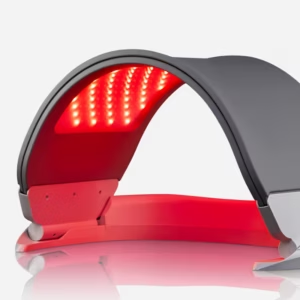
The Dermalux Flex MD is powered by Tri-Wave MD ceramic LED technology — the same proprietary system used in professional clinic panels — delivering red light at 633nm and near-infrared at 830nm via 360 individual LEDs across a flexible panel designed for face and body application. The device is both CE medically certified and FDA approved, with seven selectable treatment protocols allowing users to run red-only, NIR-only, or combined red and NIR sessions depending on their clinical target. The flexible panel design conforms to the face for hands-free treatment and lies flat for body zone application, making it the most versatile format in this edit.
For the Device Luxe reader targeting red and near-infrared protocols specifically, the Flex MD is operated in red (633nm) or red plus NIR (633nm + 830nm) mode — protocols documented in the device’s clinical evidence base for rejuvenation and structural skin repair. Session time is 30 minutes at the recommended one-inch treatment distance.
Expert position: Dr. Whitney Bowe, board-certified dermatologist, has confirmed that red and near-infrared LED therapy “triggers the production of collagen and elastin,” validating the cellular mechanism at the core of the Flex MD’s anti-aging protocol and the clinical rationale behind its red and NIR wavelength combination.
Verified buyer: One verified buyer confirms: “This has helped with my rosacea so much. Around 5 weeks in, my skin really started to calm down and I could see big improvement in my facial skin. I use it nearly every day and could not be happier.”
Pros
- Medical-grade ceramic LED technology; verified irradiance output
- CE medically certified and FDA approved
- Selectable single and multi-wavelength protocols
- Face and body application
- 360 LEDs with independent wavelength delivery
Cons
- Panel format requires dedicated session time
- Clinical-tier investment
- Blue wavelength (415nm) present — not used in red/NIR anti-aging protocols but worth noting for contraindication screening
CurrentBody Skin LED Red Light Therapy Face Mask Series 2
The most clinically validated wearable red and near-infrared mask in the CurrentBody lineup, backed by a 56-day independent study.

The Series 2 delivers red light, near-infrared, and deep near-infrared wavelengths across a full-face flexible mask with FDA clearance for advanced anti-aging use. The independent 56-day clinical study — not brand-commissioned data — gives it a documentation advantage over the majority of consumer LED masks in the red/NIR category. The flexible silicone construction ensures consistent mask-to-skin contact across facial contours, directly affecting photon delivery efficiency. Ten-minute sessions, three to five times weekly, are the studied protocol.
Pros
- Red, NIR, and deep NIR wavelengths
- 56-day independent clinical study
- FDA cleared
- Full-face flexible silicone construction
- Consistent mask-to-skin contact
Cons
- Requires charging between sessions
- Step-up investment from Series 1
CurrentBody Skin LED Red Light Therapy Face Mask Series 1
The device that established CurrentBody’s red light therapy standard — clinically validated, FDA cleared, and still the trusted entry into their red/NIR platform.

The Series 1 delivers clinically validated red light wavelengths across the full face in the same flexible silicone mask format as the Series 2, with FDA clearance for visible anti-aging. Where the Series 2 adds deep near-infrared as a third wavelength, the Series 1 operates on red and near-infrared — a precise two-wavelength protocol that reflects the primary clinical evidence base for collagen stimulation and dermal repair. For users entering the CurrentBody red light platform at the Performance tier, the Series 1 represents a well-evidenced, structured starting point.
Pros
- Red and near-infrared wavelengths; clinically validated
- FDA cleared
- Flexible silicone full-face construction
- Established clinical evidence base
- Clear upgrade path to Series 2
Cons
- Does not include deep NIR wavelength of Series 2
- Lower LED output than Series 2
CurrentBody Skin LED Neck & Décolletage Mask Series 2
The only FDA-cleared red and near-infrared device in this edit engineered specifically for the neck and chest — anatomical zones that age faster than the face and receive the least targeted treatment in most LED protocols.

The neck and décolletage are structurally different from the face — thinner dermis, less sebaceous activity, and greater cumulative UV exposure relative to the care they receive. The Series 2 Neck & Décolletage Mask delivers FDA-cleared red and near-infrared light across a flexible mask designed to conform to the neck and chest contour, addressing the collagen deficit and crepiness that full-face masks cannot reach. For users running a CurrentBody facial mask protocol, this is the logical extension — matching wavelengths, matched form factor, and a clinical evidence base that follows from the same red/NIR data driving the facial devices.
Pros
- FDA cleared for neck and chest
- Red and near-infrared wavelengths
- Flexible construction for contour fit
- Extends full red/NIR protocol below the jawline
- Direct CurrentBody platform companion to facial masks
Cons
- Zone-specific device — complement to a facial mask, not a standalone protocol
- Does not cover the face
LightStim for Wrinkles
Twenty years of clinical use, FDA clearance specifically for wrinkle treatment, and a MultiWave® patented four-wavelength system spanning the full warm-light anti-aging spectrum in a handheld format.

LightStim for Wrinkles uses proprietary MultiWave® technology to simultaneously emit amber (605nm), light red (630nm), dark red (660nm), and infrared (855nm) across 72 LEDs in a handheld device that treats one area at a time in three-minute intervals. The four-wavelength combination spans the full warm light spectrum proven for anti-aging — from the amber wavelengths that address surface circulation and inflammation, through the red wavelengths that drive collagen and elastin synthesis in the upper dermis, to the infrared wavelength that reaches deeper structural tissue. It is FDA cleared specifically to treat wrinkles on the entire face.
The clinical data is among the strongest in the handheld LED category: an FDA clinical study showed 100% of participants had significant improvement in fine lines and wrinkles in eight weeks, with 92% showing further reduction three months after the trial concluded. That sustained post-treatment result is a signal of genuine structural collagen change rather than transient surface effect. LightStim has been used by medical spas, estheticians, and dermatologists for two decades — a clinical track record that most consumer LED brands cannot approach.
The zone-by-zone application format requires more active time than a wearable full-face mask, but gives users precise control over treatment focus and duration per area.
Pros
- MultiWave® patented four-wavelength technology (605nm + 630nm + 660nm + 855nm)
- FDA cleared for full-face wrinkle treatment
- 100% participant improvement in FDA clinical study
- 20-year professional and clinical track record
- Five-year warranty; maintenance-free
- USA manufactured
Cons
- Zone-by-zone application requires active treatment time
- 72 LEDs — smaller coverage area per session than panel or full-face mask formats
- Handheld format requires dedicated attention during use
Foreo FAQ™ 202 plus
Foreo’s top-tier LED anti-aging mask, delivering FDA-cleared near-infrared and red light in the brand’s flexible medical-grade silicone wearable format.

The FAQ™ 202 plus delivers near-infrared and red light therapy across a full-face flexible silicone mask with FDA clearance. The silicone construction — medical-grade, contour-fitting, and non-porous — provides the consistent mask-to-skin contact that determines photon delivery efficiency in wearable LED devices. The hands-free format allows ten-minute treatment sessions without active engagement. For users who want a red and NIR wearable mask within the Foreo platform, the 202 plus is the Clinical-tier entry point.
Pros
- FDA cleared; near-infrared and red light
- Flexible medical-grade silicone construction
- Full-face hands-free wearable
- Consistent mask-to-skin contact
Cons
- Premium investment within the wearable mask category
- Fewer wavelengths than Clinical-tier panel devices
Foreo FAQ™ 202
The core near-infrared and red light platform in Foreo’s FAQ™ line, delivering the primary anti-aging wavelengths in the brand’s established wearable silicone format.

The FAQ™ 202 delivers near-infrared and red light therapy across Foreo’s flexible silicone full-face mask. The wavelength profile targets the established red and NIR anti-aging mechanism — collagen stimulation, fibroblast activation, and dermal repair — in a hands-free format. For users entering the Foreo LED platform at the Performance tier, the 202 delivers the core red/NIR wavelength combination with the construction quality that Foreo’s FDA-cleared devices are built on.
Pros
- Near-infrared and red light wavelengths
- Flexible silicone full-face construction
- Hands-free wearable format
- Foreo FDA-cleared platform
Cons
- Step down from the 202 plus in output
- Performance tier — Clinical-tier Dermalux and CurrentBody Series 2 deliver higher irradiance
CurrentBody Skin LED Eye Mask
The precision instrument for the periorbital zone — red and near-infrared light delivered at the proximity and angle the delicate eye area requires.
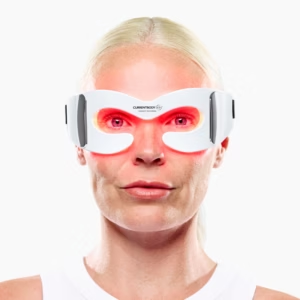
Most full-face LED masks are engineered with safety cutouts or reduced LED density around the eye area, limiting photon delivery to the periorbital zone — where crow’s feet, fine lines, and dark circles concentrate. The CurrentBody LED Eye Mask addresses this gap with a device built specifically for the eye contour, delivering red and near-infrared wavelengths at the correct proximity and angle for the thin, sensitive periorbital skin. It functions as a precision complement to a full-face red/NIR protocol, not a standalone facial treatment.
Pros
- Red and near-infrared targeted to periorbital zone
- Fills the coverage gap left by full-face masks
- Designed for thin, sensitive eye area skin
Cons
- Zone-specific — does not replace a full-face device
- Entry tier — lower irradiance than Clinical or Performance full-face devices
Foreo FAQ™ 201
The entry point to Foreo’s LED anti-aging platform — clinical wavelength red light delivery in a flexible, wearable silicone format.

The FAQ™ 201 provides access to Foreo’s LED anti-aging technology at the Entry tier. The clinical wavelength delivery and flexible silicone construction are consistent with the full FAQ™ line, and the hands-free wearable format ensures correct mask-to-skin proximity for effective photon delivery. For users new to at-home red light therapy who want a clinically positioned device from a trusted platform, the 201 provides the starting point.
Pros
- Clinical wavelength red light delivery
- Flexible silicone construction
- Hands-free wearable format
- Entry into the Foreo LED platform
Cons
- Entry-level output relative to 202 and 202 plus
- Less comprehensive wavelength profile than Performance and Clinical tier devices
The DL Standard
The Lab evaluates red light and near-infrared LED devices on four criteria: wavelength precision and match to the clinical evidence base (630–660nm for red; 810–855nm for near-infrared), irradiance output relative to studied therapeutic thresholds, FDA clearance status, and the quality and independence of clinical outcome data. Devices that hold FDA clearance for specific indications — wrinkle treatment rather than general device safety — are weighted more heavily. No device in this edit was selected on brand profile alone.
Red Light vs Near-Infrared: Head-to-Head Showdowns
Dermalux Flex MD vs CurrentBody Series 2
Two Clinical-tier devices with different format architectures. The Flex MD operates as a flat panel positioned over the face at one inch, delivering medical-grade irradiance from 360 ceramic LEDs with selectable wavelength protocols — red only, NIR only, or combined. The Series 2 is a wearable flexible mask with direct skin contact across the full face. The panel format gives the Flex MD a measurable irradiance advantage; the wearable format gives the Series 2 a photon delivery consistency advantage through confirmed mask-to-skin contact. For users targeting maximum irradiance and body zone flexibility, the Flex MD leads. For a hands-free facial mask with documented independent clinical data, the Series 2 is the cleaner choice.
LightStim for Wrinkles vs CurrentBody Series 2
The two most clinically documented devices in this edit. LightStim’s advantage is its four-wavelength MultiWave® system spanning amber through infrared, its 20-year professional track record, and its FDA clearance specifically for wrinkle treatment. The Series 2’s advantage is full-face wearable coverage in a single ten-minute session versus LightStim’s zone-by-zone three-minute-per-area protocol. For users who want whole-face coverage per session with minimal active time, the Series 2 wins. For users who want the deepest clinical documentation and precise zone targeting, LightStim is the stronger evidence-based choice.
CurrentBody Series 2 vs CurrentBody Series 1
The key distinction is the third wavelength — deep near-infrared — added in the Series 2. The Series 1 delivers the core red plus NIR combination that the primary anti-aging evidence base supports. The Series 2 adds a deeper NIR channel for enhanced tissue penetration. For users entering the CurrentBody red/NIR platform for the first time, the Series 1 is a well-evidenced starting point. For users who want maximum wavelength depth and the independently studied clinical data, the Series 2 is the correct upgrade.
Foreo FAQ™ 202 plus vs Foreo FAQ™ 202
Both deliver near-infrared and red light in Foreo’s flexible silicone wearable format. The 202 plus adds higher output and FDA clearance at the Clinical tier; the 202 operates at the Performance tier with the same wavelength profile at lower irradiance. For users committed to the Foreo platform who want Clinical-tier LED output, the 202 plus is the correct choice. For users entering the Foreo LED system at Performance tier, the 202 delivers the core wavelength combination.
LightStim for Wrinkles vs Foreo FAQ™ 202 plus
Different format architectures in the same tier. LightStim treats zone by zone with active handling; the FAQ™ 202 plus is a hands-free wearable mask. LightStim’s four-wavelength system spans a broader warm-light spectrum; the FAQ™ 202 plus covers the full face in one session. For users who prefer active, zone-controlled treatment with the strongest clinical data in the category, LightStim leads. For users who prioritize hands-free full-face coverage in a single session, the FAQ™ 202 plus is the better fit.
CurrentBody LED Eye Mask vs Full-Face Masks for Periorbital Treatment
Full-face masks are not engineered for precision periorbital delivery. The Eye Mask provides targeted red and NIR photon delivery to the zone where crow’s feet, fine lines, and dark circles require the closest proximity and the most direct angle. For periorbital-specific concerns, the Eye Mask is not a substitute for a full-face device — it is a protocol extension that full-face masks cannot replicate.
Decision Guide: Which Red Light and Near-Infrared Device Belongs in Your Protocol?
You want the most clinically powerful at-home LED system available: Dermalux Flex MD. Medical-grade irradiance, selectable wavelength protocols, face and body application, CE medically certified and FDA approved.
You want a full-face wearable mask with independent clinical data: CurrentBody Skin LED Red Light Therapy Face Mask Series 2. Documented 56-day independent study, three wavelengths including deep NIR, FDA cleared.
You want the strongest evidence base in a handheld format: LightStim for Wrinkles. FDA cleared for wrinkle treatment, 100% participant improvement in clinical study, 20-year professional track record, four-wavelength MultiWave® system.
You want to extend your red/NIR protocol to the neck and chest: CurrentBody Skin LED Neck & Décolletage Mask Series 2. The only FDA-cleared red and NIR device in this edit engineered specifically for below the jawline.
You want periorbital precision your full-face mask cannot deliver: CurrentBody Skin LED Eye Mask. Targeted red and NIR delivery at the correct proximity and angle for the eye contour zone.
You want to enter the Foreo LED platform at the Performance tier: Foreo FAQ™ 202. Near-infrared and red light in flexible silicone wearable format, consistent hands-free delivery.
You want the entry point into red light therapy: Foreo FAQ™ 201. Clinical wavelength delivery, flexible silicone construction, lowest investment in the category.
Safety & Protocol
Red light and near-infrared LED therapy is well-tolerated across the clinical evidence base when used within studied parameters. The following guidelines reflect the dermatological consensus for safe at-home use.
Contraindications: Photosensitizing medications (tetracyclines, isotretinoin, certain NSAIDs and diuretics), photosensitive conditions (lupus, porphyria), pregnancy and breastfeeding, active cancer or history of skin cancer, pre-existing eye conditions including glaucoma and macular degeneration, and photosensitive epilepsy. Consult your dermatologist or physician before beginning any red light or near-infrared protocol if any of these apply.
Melasma note: Near-infrared wavelengths at higher irradiance levels have been associated with thermal triggering of melasma in susceptible individuals. Users with active melasma should consult a dermatologist before using any device incorporating near-infrared wavelengths and monitor closely during early use.
Frequency guidelines: Three to five sessions per week is the clinically studied range for at-home red and near-infrared LED therapy. Daily use beyond this range does not deliver proportional benefit and may increase cumulative skin sensitization.
Protocol: Apply devices to clean, dry skin without active sensitizing topicals. Apply serums and moisturizers following the session. Use provided eye protection for all session formats. Follow manufacturer session time and distance specifications precisely — longer is not better with photobiomodulation.
When to consult a professional: Any skin response that worsens over successive sessions, redness persisting beyond 90 minutes post-session, eye discomfort during or after treatment, or any inflammatory response in users with known photosensitive conditions. Drs. Idriss, Bowe, King, Engelman, Ciraldo, and Zeichner consistently advise that unexpected responses from any energy device warrant professional assessment before continuing use.
FAQ
What wavelengths are used in red light and near-infrared LED masks? Red light therapy for anti-aging uses wavelengths in the 630–660nm range. Near-infrared therapy operates at 810–855nm. The devices in this edit use these wavelengths individually or in combination, targeting collagen synthesis, fibroblast activation, and deep dermal repair.
What is the difference between red light and near-infrared for anti-aging? Red light at 630–660nm reaches the upper dermis and drives collagen and elastin synthesis at the tissue level most directly responsible for surface wrinkle depth and skin firmness. Near-infrared at 810–855nm penetrates deeper into the mid and lower dermis, addressing structural collagen networks and cellular energy production at greater tissue depth. The combination targets the full anti-aging depth range.
How long does it take to see results from red light and near-infrared therapy? Clinical studies document measurable improvement in fine lines and wrinkles from eight to twelve weeks of consistent use at three to five sessions per week. LightStim’s FDA clinical study showed 100% of participants with significant improvement at eight weeks, with 92% showing further reduction at the three-month post-trial mark — evidence that structural collagen change, not surface effect, is the mechanism.
Are red light and near-infrared LED masks safe for all skin tones? Red and near-infrared wavelengths are generally well-tolerated across Fitzpatrick skin types. The primary photosensitivity concern in LED therapy for deeper skin tones relates to high-intensity visible light and blue light, not the red and NIR wavelengths in this edit. Users with melanin-rich skin should nonetheless consult a dermatologist before beginning any LED protocol and monitor for pigmentation changes during early use.
Can I use a red light mask with retinol? Users on prescription-strength retinoids (tretinoin, isotretinoin) should obtain guidance from their prescribing dermatologist before combining with any LED therapy. The standard approach when clearance is given is to pause retinoid application three to seven days before and after LED sessions. Over-the-counter retinol presents lower sensitization risk; apply LED therapy to clean skin without retinol applied immediately before the session.
How often should I use a red light and near-infrared LED mask? Three to five sessions per week is the clinically studied protocol range for at-home red and near-infrared therapy. This frequency is supported by the evidence base across devices in this edit. Daily use beyond this range does not improve outcomes and may increase the risk of cumulative skin sensitization.
Is the Dermalux Flex MD worth the investment for home use? The Dermalux Flex MD operates at irradiance levels confirmed to be at least three times more powerful than comparable portable LED devices, delivering medical-grade wavelength precision via proprietary ceramic LED technology. For users who have been using Performance-tier LED masks and want to move to clinical-grade irradiance at home, the Flex MD represents the ceiling of what portable LED technology currently delivers outside a clinic setting.
What makes LightStim for Wrinkles different from wearable LED masks? LightStim for Wrinkles uses a four-wavelength MultiWave® system — amber (605nm), light red (630nm), dark red (660nm), and infrared (855nm) — in a handheld format that treats one facial zone at a time in three-minute intervals. Its FDA clearance is specific to wrinkle treatment (not general device safety clearance), and its clinical study data — 100% participant improvement in eight weeks, sustained at three months post-trial — is among the strongest in the at-home LED category.
Can I use a red light face mask and the eye mask in the same session? Yes. The CurrentBody LED Eye Mask is designed as a protocol complement to full-face CurrentBody red and NIR devices. Use the full-face mask first, then apply the eye mask to the periorbital zone for a complete session. Most full-face masks have reduced LED density or safety cutouts around the eye area; the dedicated eye mask ensures the periorbital zone receives targeted treatment at the correct proximity and angle.
What is the best red light mask for the neck? The CurrentBody Skin LED Neck & Décolletage Mask Series 2 is the only FDA-cleared red and near-infrared device in this edit engineered specifically for the neck and chest. It delivers the same red and NIR wavelength combination as the CurrentBody facial masks in a flexible format designed to conform to the neck and décolletage contour.
Final Reference Chart
| Device | Tier | The DL Source |
|---|---|---|
| Dermalux Flex MD | Clinical · ★ DL-Chosen | Explore |
| CurrentBody Skin LED Red Light Therapy Face Mask Series 2 | Clinical | Explore |
| CurrentBody Skin LED Red Light Therapy Face Mask Series 1 | Performance | Explore |
| CurrentBody Skin LED Neck & Décolletage Mask Series 2 | Performance | Explore |
| LightStim for Wrinkles | Performance | Explore |
| Foreo FAQ™ 202 plus | Performance | Explore |
| Foreo FAQ™ 202 | Performance | Explore |
| CurrentBody Skin LED Eye Mask | Entry | Explore |
| Foreo FAQ™ 201 | Entry | Explore |
Previously in The Lab: LED Mask Side Effects: What’s Real and What’s Marketing
Coming next: How Often Should You Use an LED Mask — The Lab breaks down the clinical frequency data for at-home LED therapy, establishing the protocol parameters that separate effective use from over-treatment.