
This article contains affiliate links. If you purchase through these links, we may earn a commission at no extra cost to you.
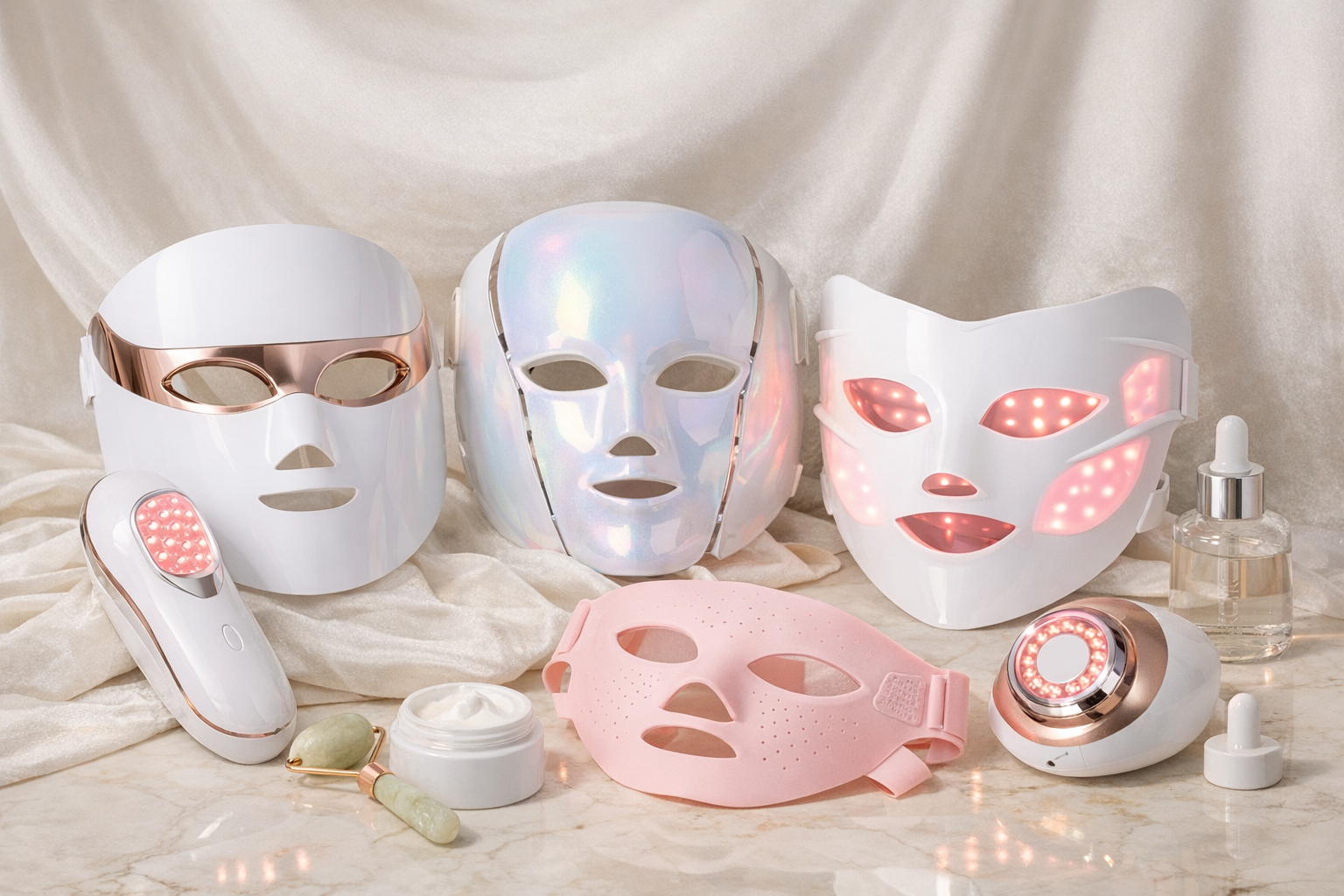
The best LED masks for sensitive skin are not simply gentler versions of standard LED masks — they are devices selected for specific wavelength profiles, construction materials, and irradiance levels that the clinical evidence supports as well-tolerated by reactive, rosacea-prone, and inflammation-sensitive skin. Blue light is excluded. High-heat near-infrared output requires careful handling. And the device material in contact with sensitized skin matters as much as the light being delivered. The Lab curates the definitive edit of the best LED masks for sensitive skin, with the clinical rationale behind every selection.
Table of Contents
Quick Picks
- Dermalux Flex MD — Clinical · ★ DL-Chosen — Best for: medical-grade red and NIR phototherapy for reactive and rosacea-prone skin
- CurrentBody Skin LED Red Light Therapy Face Mask Series 2 — Clinical — Best for: red and NIR anti-aging protocol on sensitive skin with independent clinical data
- CurrentBody Skin LED Red Light Therapy Face Mask Series 1 — Performance — Best for: proven red light entry protocol for sensitive and reactive skin types
- LightStim for Wrinkles — Performance — Best for: gentle multi-wavelength warm light protocol with 20-year clinical track record
- Foreo FAQ™ 202 plus — Performance — Best for: red and NIR wearable mask in non-allergenic medical-grade silicone
- CurrentBody Skin LED Neck & Décolletage Mask Series 2 — Performance — Best for: sensitive neck and chest skin, red and NIR protocol
- Foreo FAQ™ 202 — Performance — Best for: NIR and red light in flexible silicone, reactive skin-safe construction
- CurrentBody Skin LED Eye Mask — Entry — Best for: periorbital sensitive skin, targeted red and NIR treatment
- CurrentBody Skin LED Lip Mask — Entry — Best for: delicate lip area red light therapy for sensitive skin
- Foreo FAQ™ 201 — Entry — Best for: entry-level red light therapy in gentle silicone wearable format
Comparison Chart
| Device | Tier | Key Technology Claim | Best For | The DL Source |
|---|---|---|---|---|
| Dermalux Flex MD | Clinical · ★ DL-Chosen | Medical-grade red 633nm + NIR 830nm; CE certified and FDA approved; documented for rosacea and reactive skin conditions; selectable wavelength protocols | Reactive, rosacea-prone and sensitive skin requiring clinical-grade anti-inflammatory LED therapy | Explore |
| CurrentBody Skin LED Red Light Therapy Face Mask Series 2 | Clinical | Red + NIR + deep NIR; no blue light; 56-day independent clinical study; FDA cleared; flexible silicone construction | Full-face red and NIR sensitive skin anti-aging protocol | Explore |
| CurrentBody Skin LED Red Light Therapy Face Mask Series 1 | Performance | FDA cleared red and NIR wavelengths; clinically validated; flexible silicone full-face mask | Sensitive skin entry into red light therapy | Explore |
| LightStim for Wrinkles | Performance | MultiWave® 605nm + 630nm + 660nm + 855nm; no blue light; FDA cleared; 100% participant improvement in 8-week clinical study | Gentle warm-spectrum zone-by-zone wrinkle treatment on sensitive skin | Explore |
| Foreo FAQ™ 202 plus | Performance | FDA-cleared NIR and red light; medical-grade silicone; no allergen contact materials; hands-free wearable | Reactive skin — NIR and red in non-allergenic silicone format | Explore |
| CurrentBody Skin LED Neck & Décolletage Mask Series 2 | Performance | FDA-cleared red and NIR; flexible contour fit for neck and chest | Sensitive neck and décolletage skin, red and NIR protocol | Explore |
| Foreo FAQ™ 202 | Performance | NIR and red light therapy; flexible medical-grade silicone; hands-free wearable | Reactive skin — consistent NIR and red protocol in gentle format | Explore |
| CurrentBody Skin LED Eye Mask | Entry | Red and NIR targeted to periorbital zone; designed for thin, delicate skin | Sensitive periorbital skin — crow’s feet and dark circles | Explore |
| CurrentBody Skin LED Lip Mask | Entry | Red light therapy for the lip area; anti-aging for delicate lip skin | Sensitive lip and perioral skin — fine lines and volume loss | Explore |
| Foreo FAQ™ 201 | Entry | Clinical wavelength red light; flexible medical-grade silicone; hands-free wearable | Entry-level red light therapy for sensitive skin types | Explore |
Why Wavelength Selection Matters for Sensitive Skin
Sensitive skin does not respond poorly to LED therapy — it responds poorly to the wrong LED therapy. The distinction is specific and clinically grounded. Blue light at 415nm, while effective for acne-causing bacteria, can trigger inflammatory responses in reactive and rosacea-prone skin. High-intensity near-infrared generates thermal energy at depth; for skin with a compromised barrier or active rosacea, heat is a known flare trigger. And device materials in direct contact with reactive skin — rigid plastics, synthetic coatings — can themselves cause irritation independent of the light being delivered.
Every device in this edit addresses these variables deliberately. All operate exclusively on red (630–660nm) and near-infrared (810–855nm) wavelengths — the anti-inflammatory, collagen-stimulating range confirmed as well-tolerated across reactive skin types in peer-reviewed research. Red light at 630–660nm has been shown to reduce inflammation, support skin barrier function, and calm redness associated with rosacea. Near-infrared at 830nm penetrates deeper to modulate inflammatory cascades at the cellular level. Neither wavelength contains the irritation risk associated with blue light for sensitized skin.
Construction material is the second variable. The devices in this edit that make direct skin contact use medical-grade silicone — flexible, non-porous, and non-allergenic. The Dermalux Flex MD operates at one inch from the skin with a Perspex protective cover. No device in this edit requires sensitized skin to make contact with rigid plastic or synthetic materials.
Best LED Masks for Sensitive Skin: Full Reviews
Dermalux Flex MD
The clinical benchmark for LED therapy on reactive and sensitive skin — CE medically certified, FDA approved, and documented across professional case studies specifically for rosacea, inflammation, and compromised skin conditions. The DL-Chosen pick in this edit.
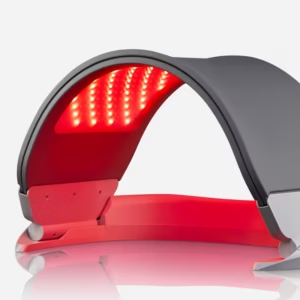
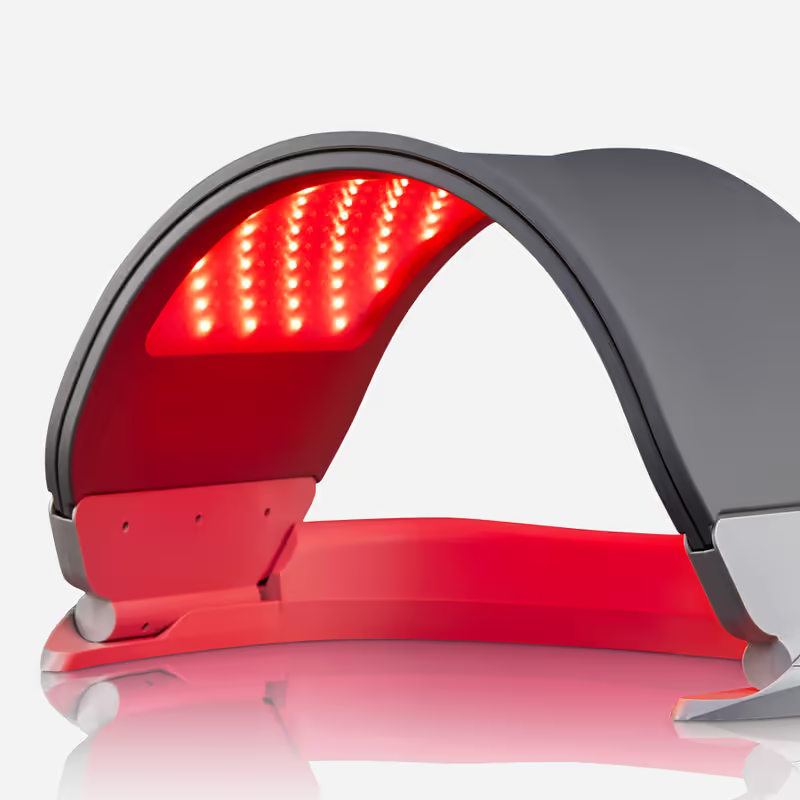
The Dermalux Flex MD delivers red light at 633nm and near-infrared at 830nm via 360 ceramic LEDs in a flexible panel with seven selectable treatment protocols. For sensitive skin users, the clinical relevance is in the protocol flexibility — red-only mode delivers the anti-inflammatory and collagen-stimulating benefits of 633nm without the thermal contribution of near-infrared, making it the correct starting protocol for reactive and rosacea-prone skin. Near-infrared can be introduced progressively as tolerance is established. The Perspex protective cover ensures no direct contact between the panel and sensitized skin. Session time is 30 minutes at one inch from the skin surface.
The Flex MD’s documentation for sensitive and reactive skin conditions is more extensive than any other device in this edit. Professional case studies confirm its use in rosacea management, inflammatory skin conditions, and post-procedural recovery — contexts where skin sensitivity is at its highest.
Expert position: Dr. Heidi Waldorf, board-certified dermatologist, has noted that LED therapy using red and near-infrared wavelengths “reduces inflammation and promotes healing” — the dual mechanism that makes the Flex MD’s red and NIR protocol specifically suited to sensitive and rosacea-prone skin.
Verified buyer: One verified buyer confirms: “This has helped with my rosacea so much. Around 5 weeks in, my skin really started to calm down and the red area started to go. I use it nearly every day and could not be happier with the results.”
Pros
- Red-only protocol option — no NIR thermal contribution for most reactive skin
- CE medically certified and FDA approved
- No direct skin contact — Perspex cover maintains distance
- Documented for rosacea and reactive skin in professional case studies
- Seven selectable wavelength protocols
- Medical-grade ceramic LED technology
Cons
- Clinical-tier investment
- 30-minute session time
- Panel format requires dedicated positioning
CurrentBody Skin LED Red Light Therapy Face Mask Series 2
The most independently validated wearable red and NIR mask for sensitive skin — flexible silicone construction, no blue light, and a 56-day clinical study conducted independently of the brand.

Among the best LED masks for sensitive skin, the Series 2 delivers red, near-infrared, and deep near-infrared wavelengths across a full-face flexible silicone mask with FDA clearance. For sensitive skin, the critical attributes are what this mask does not include — no blue light, no rigid contact materials, no high-irradiance blue spectrum that can aggravate reactive skin. The 56-day independent clinical study provides the documentation base that most consumer LED masks cannot match. The flexible silicone construction conforms to facial contours without pressure points, relevant for skin that is reactive to friction or contact stress.
Pros
- Red and NIR only — no blue light
- 56-day independent clinical study
- FDA cleared
- Flexible silicone full-face construction
- No allergen contact materials
Cons
- Near-infrared present — users with active rosacea flares should start with shorter sessions and monitor
- Step-up investment from Series 1
CurrentBody Skin LED Red Light Therapy Face Mask Series 1
The established red and NIR wearable platform for sensitive skin — FDA cleared, clinically validated, and built in the same flexible silicone format as the Series 2.

The Series 1 is among the best LED masks for sensitive skin at the Performance tier — delivering red and near-infrared wavelengths in a full-face flexible silicone mask with FDA clearance. For sensitive skin users entering the CurrentBody red light platform, the Series 1 provides the core red and NIR wavelength combination at a Performance-tier investment. No blue light. Flexible, non-porous silicone construction. Ten-minute sessions three to five times weekly is the studied protocol.
Pros
- Red and NIR only — no blue light
- FDA cleared
- Flexible silicone full-face construction
- Clear upgrade path to Series 2
- Established clinical evidence base
Cons
- Does not include the deep NIR wavelength of Series 2
- Lower irradiance than Clinical-tier devices
LightStim for Wrinkles
Four warm-spectrum wavelengths — amber, light red, dark red, and infrared — with no blue light and no UV, FDA cleared for full-face wrinkle treatment with a 20-year professional track record on all skin types including sensitive.

LightStim for Wrinkles is one of the best LED masks for sensitive skin at Performance tier, emitting amber (605nm), light red (630nm), dark red (660nm), and infrared (855nm) simultaneously via 72 LEDs. The warm-spectrum wavelength profile — anchored by amber, which has documented anti-redness and circulation-supporting properties — makes it well-positioned for sensitive and rosacea-prone skin. No blue light. No UV. The device is FDA cleared specifically for wrinkle treatment across all skin types, and its zone-by-zone three-minute application allows sensitive skin users to begin with a limited treatment area and expand as tolerance is established. The 20-year professional track record across medical spas and dermatology settings includes use on reactive and sensitized skin.
Pros
- Amber + red + infrared only — no blue light
- Zone-by-zone application allows gradual introduction
- FDA cleared for all skin types
- 20-year professional and clinical track record
- Five-year warranty; maintenance-free
Cons
- Zone-by-zone treatment requires active handling
- 72 LEDs — smaller coverage area per session than full-face formats
- Infrared warmth — sensitive skin users should monitor for heat response
Foreo FAQ™ 202 plus
FDA-cleared near-infrared and red light in Foreo’s medical-grade silicone wearable — the non-allergenic construction making it specifically relevant for contact-reactive sensitive skin.

The FAQ™ 202 plus delivers near-infrared and red light across a full-face flexible silicone mask with FDA clearance. For sensitive skin users looking for the best LED masks for sensitive skin in a wearable format, the medical-grade silicone is the defining material advantage — non-porous, non-allergenic, and free of the synthetic coatings that can trigger contact sensitivity in reactive skin. The hands-free wearable format delivers consistent mask-to-skin contact without pressure, and the ten-minute session length keeps thermal exposure within well-tolerated ranges for most sensitive skin types.
Pros
- Medical-grade silicone — non-allergenic, non-porous
- No blue light — NIR and red only
- FDA cleared
- Hands-free wearable — no manual pressure on sensitive skin
- Full-face coverage in single session
Cons
- NIR present — active rosacea flare users should start cautiously
- Performance-tier investment
CurrentBody Skin LED Neck & Décolletage Mask Series 2
FDA-cleared red and near-infrared for the neck and chest — body zones where thin, often-neglected skin is among the most reactive to environmental exposure and hormonal changes.

When considering the best LED masks for sensitive skin, the neck and décolletage are frequently overlooked — structurally thinner than facial skin, more prone to reactive redness, and frequently excluded from sensitive skin protocols that focus exclusively on the face. The Series 2 Neck & Décolletage Mask delivers FDA-cleared red and near-infrared light in a flexible mask designed for neck and chest contour. For sensitive skin users already running a CurrentBody facial protocol, this is the correct extension — matching wavelengths, matching construction, no blue light.
Pros
- Red and NIR only — no blue light
- FDA cleared for neck and chest
- Flexible construction for sensitive zone contour fit
- Extends protocol to frequently neglected reactive zones
Cons
- Zone-specific — does not replace a full-face device
- NIR present — monitor for heat response on thin neck skin
Foreo FAQ™ 202
Near-infrared and red light in Foreo’s established medical-grade silicone wearable platform — Performance-tier entry for sensitive skin users who prioritize non-allergenic construction.

The FAQ™ 202 delivers near-infrared and red light in Foreo’s flexible medical-grade silicone full-face mask. The wavelength profile and material are identical to the 202 plus at lower irradiance, making it the accessible entry into the Foreo LED platform for sensitive skin users who want the non-allergenic silicone construction without the 202 plus investment.
Pros
- Medical-grade silicone — non-allergenic
- No blue light
- Hands-free wearable
- Gentle introduction to NIR therapy at lower irradiance
Cons
- Lower output than 202 plus
- Performance tier — Clinical-tier devices deliver higher irradiance
CurrentBody Skin LED Eye Mask
Targeted red and NIR therapy for the periorbital zone — where skin is at its thinnest, most delicate, and most commonly reactive to standard skincare.
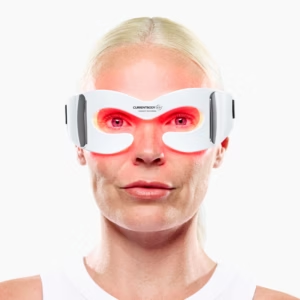
The periorbital zone presents the most demanding sensitive skin challenge in any facial protocol. Skin thickness here is a fraction of the cheek or forehead, making it the area most prone to irritation from topicals, reactive redness, and fine line formation. The CurrentBody LED Eye Mask delivers red and near-infrared light at the proximity and angle specific to the eye contour, with a design that accommodates the structural sensitivity of this zone. For sensitive skin users, it addresses the area that full-face masks are least equipped to treat effectively.
Pros
- Red and NIR targeted to most delicate facial zone
- Designed for thin periorbital skin
- No blue light
- Protocol complement to full-face devices
Cons
- Zone-specific — not a standalone facial device
- Entry tier
CurrentBody Skin LED Lip Mask
Red light therapy for the lip area — the most frequently overlooked zone in sensitive skin LED protocols and one of the earliest to show age-related volume loss and fine lines.
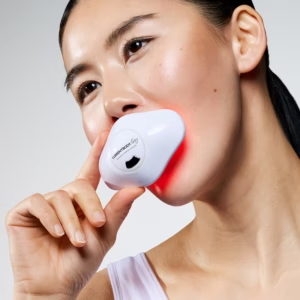
The perioral zone — one of the most challenging areas to address with the best LED masks for sensitive skin — is structurally distinct from the rest of the face — thinner skin, higher movement frequency, and a lipid barrier that differs from the cheek and forehead. For sensitive skin users, it is also a zone where topical actives are most likely to cause irritation. The CurrentBody LED Lip Mask delivers red light therapy to the lip area in a wearable format engineered for this specific zone. For users running a full sensitive skin LED protocol, the lip mask addresses the perioral gap that full-face devices cannot resolve with precision.
Pros
- Red light targeted to perioral zone
- Designed for delicate lip skin
- No blue light
- Targets early-onset fine lines and volume loss
Cons
- Zone-specific — not a standalone device
- Entry tier — lower output than full-face devices
Foreo FAQ™ 201
The entry point to Foreo’s LED anti-aging platform — clinical wavelength red light in flexible medical-grade silicone, suitable for sensitive skin at the lowest investment in this edit.

The FAQ™ 201 delivers clinical wavelength red light in Foreo’s flexible medical-grade silicone wearable — making it one of the best LED masks for sensitive skin at Entry tier. For sensitive skin users new to LED therapy who want a clinically positioned device in a non-allergenic format at an Entry-tier investment, the 201 is the correct starting point. The lower irradiance relative to Performance and Clinical tier devices is an asset for reactive skin in the introductory phase of a protocol.
Pros
- Medical-grade silicone — non-allergenic
- No blue light
- Lower irradiance — appropriate for sensitive skin protocol introduction
- Hands-free wearable
Cons
- Entry-level output — limited depth of penetration versus Performance and Clinical devices
- Single wavelength profile
The DL-Chosen: Dermalux Flex MD
The Lab designates the Dermalux Flex MD as the DL-Chosen pick for the best LED masks for sensitive skin. No device in this edit carries a more rigorous medical certification framework — CE medically certified and FDA approved — or a more extensively documented evidence base for reactive, rosacea-prone, and inflammation-sensitive skin conditions. The selectable protocol architecture is decisive for this specific use case: red-only mode at 633nm allows sensitive skin users to begin with the anti-inflammatory benefits of red light without the thermal contribution of near-infrared, a distinction that matters clinically for rosacea-triggered and heat-reactive skin. Independent testing has confirmed the Flex MD operates at least three times more powerful than comparable portable devices — delivering clinical-grade photon energy at the irradiance levels where photobiomodulation produces documented tissue-level results. For the Device Luxe reader with sensitive or reactive skin who wants the most clinically defensible LED device available for home use, the Dermalux Flex MD is the unambiguous choice.
The DL Standard
The Lab evaluates LED masks for sensitive skin on five criteria: wavelength profile (red and NIR only — no blue light), contact material safety (medical-grade silicone or no direct contact), FDA clearance status, documented clinical evidence for anti-inflammatory outcomes, and irradiance levels within the studied therapeutic range for reactive skin. No device in this edit was selected on brand recognition alone. Every inclusion reflects a specific clinical rationale for sensitive skin use.
Best LED Masks for Sensitive Skin: Head-to-Head Showdowns
Dermalux Flex MD vs CurrentBody Series 2 for Sensitive Skin
Both are Clinical-tier devices with red and NIR wavelength profiles and no blue light. The Flex MD’s decisive advantage for sensitive skin is its red-only protocol option — users with active rosacea or high skin reactivity can run 633nm exclusively without NIR thermal contribution, then introduce NIR progressively. The Series 2 delivers a fixed tri-wave protocol including deep NIR. For the most reactive sensitive skin, the Flex MD’s protocol flexibility is the superior clinical tool. For users with moderate sensitivity wanting full-face wearable coverage in a single session, the Series 2 is the cleaner choice. For users with active rosacea or heat-triggered reactivity, the Flex MD’s protocol control is the correct answer.
CurrentBody Series 2 vs Foreo FAQ™ 202 plus for Sensitive Skin
Both Performance-adjacent Clinical-tier devices using red and NIR in flexible silicone wearable formats. The Series 2 has the independent clinical study advantage. The FAQ™ 202 plus has the material advantage — Foreo’s medical-grade silicone is the most rigorously specified non-allergenic contact material in the category. For sensitive skin with contact reactivity as the primary concern, the FAQ™ 202 plus silicone construction is the better fit. For sensitive skin where documented clinical outcome data is the priority, the Series 2 leads.
LightStim for Wrinkles vs CurrentBody Series 1 for Sensitive Skin
Both Performance-tier, both red-spectrum-only, both FDA cleared. LightStim’s amber wavelength (605nm) adds an anti-redness dimension specifically relevant for sensitive and rosacea-prone skin; the zone-by-zone format allows gradual introduction for reactive users. The Series 1 delivers full-face coverage per ten-minute session in a wearable format. For sensitive skin users who want gradual zone-controlled introduction with an anti-redness wavelength included, LightStim is the better starting point. For users who want hands-free full-face coverage, the Series 1 is more practical.
Foreo FAQ™ 202 vs Foreo FAQ™ 202 plus for Sensitive Skin
The wavelength profile is identical — NIR and red. The distinction is irradiance and tier. For sensitive skin, lower irradiance in the introductory phase is clinically preferable. The FAQ™ 202 is the better starting point for reactive skin new to NIR therapy. The FAQ™ 202 plus is the upgrade once tolerance is established and Clinical-tier output is the target.
CurrentBody LED Eye Mask vs Foreo FAQ™ 201 for Sensitive Skin Entry Tier
Different zones and formats. The Eye Mask targets the periorbital zone with precision; the FAQ™ 201 covers the full face at lower irradiance. For sensitive skin users whose primary concern is periorbital fine lines and dark circles, the Eye Mask is the correct Entry-tier device. For users wanting full-face entry-level red light therapy in the gentlest available format, the FAQ™ 201 is the better fit.
CurrentBody LED Lip Mask — Why It Belongs in a Sensitive Skin Protocol
The lip and perioral zone is the most commonly omitted area in sensitive skin LED protocols — too delicate for many full-face masks to address precisely, too significant in the aging profile to ignore. The Lip Mask fills a gap no other device in this edit covers. It is not a standalone protocol device — it is a precision complement that makes a sensitive skin LED routine complete.
Decision Guide: Which LED Mask for Sensitive Skin Belongs in Your Protocol?
You have rosacea or heat-triggered reactive skin and want the most clinically controlled option: Dermalux Flex MD — DL-Chosen. Red-only protocol, CE medically certified and FDA approved, no direct skin contact, documented for rosacea and reactive conditions.
You want a full-face wearable with independent clinical data and no blue light: CurrentBody Skin LED Red Light Therapy Face Mask Series 2. Red and NIR only, 56-day independent study, FDA cleared, flexible silicone.
You want to enter the CurrentBody red light platform at Performance tier: CurrentBody Skin LED Red Light Therapy Face Mask Series 1. Red and NIR, FDA cleared, flexible silicone, clear upgrade path.
You want gradual zone-by-zone introduction with an anti-redness wavelength: LightStim for Wrinkles. Amber + red + infrared, no blue light, FDA cleared, 20-year track record on all skin types.
You want NIR and red in the most rigorously specified non-allergenic silicone: Foreo FAQ™ 202 plus. Medical-grade silicone, FDA cleared, hands-free full-face wearable.
You want to extend your sensitive skin protocol to the neck and chest: CurrentBody Skin LED Neck & Décolletage Mask Series 2. Red and NIR, FDA cleared, flexible contour fit.
You want gentle NIR and red at lower irradiance to begin a sensitive skin protocol: Foreo FAQ™ 202. Lower irradiance entry into NIR therapy, medical-grade silicone, no blue light.
You need targeted red and NIR for the periorbital zone: CurrentBody Skin LED Eye Mask. Designed for the most delicate facial skin, red and NIR, precision zone delivery.
You want to address the lip and perioral zone in your sensitive skin protocol: CurrentBody Skin LED Lip Mask. Red light for the most commonly omitted zone in sensitive skin LED routines.
You want the gentlest possible Entry-tier full-face introduction to red light therapy: Foreo FAQ™ 201. Medical-grade silicone, clinical wavelength, lowest irradiance in this edit.
Safety & Protocol for Sensitive Skin
Sensitive skin requires a more conservative LED protocol introduction than standard skin types. The following guidance reflects the clinical consensus for reactive, rosacea-prone, and sensitized skin.
Start with red-only protocols: For reactive and rosacea-prone skin, begin with red light (630–660nm) only. Near-infrared generates thermal energy at depth; heat is a documented rosacea trigger. Introduce NIR only after confirming red-only tolerance across multiple sessions.
Begin at reduced frequency: Three sessions per week is the maximum starting frequency for sensitive and reactive skin. Clinical evidence for protocol initiation in sensitized populations supports starting lower — two sessions per week for the first two weeks — and increasing only if no adverse response is observed.
Patch test first: Apply the device to a small, less reactive area — the cheek or jawline — before full-face use. Monitor for 24 to 48 hours. If no adverse response, proceed to full-face protocol.
Contraindications specific to sensitive skin: Active rosacea flare with broken skin or open pustules — wait for the active flare to resolve before resuming. Active inflammatory conditions including eczema or psoriasis in acute phase — consult a dermatologist before beginning. Photosensitizing medications — the list includes tetracyclines, isotretinoin, certain NSAIDs, and herbal photosensitizers. Verify with your physician before introducing LED therapy.
Post-session protocol: Apply gentle, barrier-supporting skincare immediately after sessions — ceramides, niacinamide, or hyaluronic acid. Avoid applying active exfoliants, retinoids, or fragranced products to recently treated skin. Use SPF daily — rosacea and sensitive skin are particularly prone to UV-triggered flare.
When to consult a professional: Any redness that does not resolve within 90 minutes post-session. Any progressive worsening of reactive symptoms across sessions. Any new inflammatory response in a previously stable skin condition. Drs. Idriss, Bowe, King, Engelman, Ciraldo, and Zeichner consistently advise that LED therapy on sensitive or rosacea-prone skin should be introduced under dermatologist guidance where possible, and any unexpected response warrants professional assessment before continuing.
FAQ
Are LED masks safe for sensitive skin?
Red and near-infrared LED therapy — the technology behind the best LED masks for sensitive skin — is well-tolerated when the correct wavelengths are used and protocols are followed. The critical distinction is wavelength selection — blue light (415nm) can trigger inflammation in reactive skin and is excluded from every device in this edit. Red (630–660nm) and near-infrared (810–855nm) have anti-inflammatory properties that make them specifically appropriate for sensitive skin types.
Can I use an LED mask if I have rosacea? Red and near-infrared LED therapy has documented anti-inflammatory effects that are relevant for rosacea management. Clinical evidence supports reduced redness and improved barrier function in rosacea-prone skin with consistent red and NIR LED use. The heat generated by near-infrared is a consideration — users with heat-triggered rosacea should begin with red-only protocols and introduce NIR cautiously. Consult your dermatologist before beginning any LED protocol for active rosacea.
Which LED mask is best for sensitive skin? Which are the best LED masks for sensitive skin? The Dermalux Flex MD is the DL-Chosen pick for sensitive skin in this edit — its red-only protocol option, medical-grade CE certification and FDA approval, and documented evidence base for rosacea and reactive skin conditions make it the most clinically defensible choice. For a full-face wearable alternative at Clinical tier, the CurrentBody Series 2 provides an independently documented red and NIR protocol in flexible silicone with no blue light.
Should I avoid near-infrared if I have sensitive skin? Not necessarily — near-infrared has documented anti-inflammatory benefits that are relevant for sensitive skin. The consideration is thermal: near-infrared generates warmth at depth, and heat is a trigger for some rosacea subtypes. The approach for heat-reactive sensitive skin is to begin with red-only protocols and introduce near-infrared progressively over several weeks as tolerance is established.
Can LED masks help with rosacea redness? Peer-reviewed evidence supports red and near-infrared LED therapy — including the best LED masks for sensitive skin in this edit — as an adjunct management approach for rosacea redness. The anti-inflammatory mechanism of photobiomodulation at these wavelengths targets the inflammatory cascade that drives rosacea symptoms. LED therapy does not cure rosacea — it supports management alongside a dermatologist-directed treatment plan.
What makes an LED mask suitable for sensitive skin? The best LED masks for sensitive skin share four characteristics: wavelength profile (red and NIR only — no blue light), contact material (medical-grade silicone or no direct skin contact), irradiance level within studied therapeutic ranges, and FDA clearance. Every device in this edit meets all four criteria.
How often should I use an LED mask on sensitive skin? When using the best LED masks for sensitive skin, begin at two to three sessions per week for the first two weeks. If no adverse response is observed, increase to three to five sessions per week — the clinically studied range for LED therapy. Sensitive skin protocols should be introduced more gradually than standard skin type protocols.
Can I use LED therapy alongside my rosacea topicals? In most cases yes, but topical prescription medications for rosacea — metronidazole, azelaic acid, ivermectin — should be discussed with your prescribing dermatologist before introducing LED therapy. Some topicals increase photosensitivity. Apply LED therapy to clean skin without active topicals applied immediately beforehand.
Is the Foreo FAQ™ silicone safe for very reactive skin? Foreo’s medical-grade silicone is non-porous, non-allergenic, and free of synthetic coatings associated with contact sensitivity. For users whose reactive skin includes contact sensitivity to device materials, the Foreo FAQ™ line’s silicone construction is the most specifically addressed material specification in this edit.
Do I need a separate eye and lip mask for sensitive skin? Not mandatory, but highly recommended for a complete protocol. Full-face LED masks have inherent limitations in periorbital and perioral zone precision — safety design requirements and mask geometry mean these zones receive less targeted photon delivery than the cheek, forehead, and jawline. The CurrentBody Eye Mask and Lip Mask address this gap with zone-specific devices engineered for the most delicate facial skin.
Final Reference Chart
| Device | Tier | The DL Source |
|---|---|---|
| Dermalux Flex MD | Clinical · ★ DL-Chosen | Explore |
| CurrentBody Skin LED Red Light Therapy Face Mask Series 2 | Clinical | Explore |
| CurrentBody Skin LED Red Light Therapy Face Mask Series 1 | Performance | Explore |
| LightStim for Wrinkles | Performance | Explore |
| Foreo FAQ™ 202 plus | Performance | Explore |
| CurrentBody Skin LED Neck & Décolletage Mask Series 2 | Performance | Explore |
| Foreo FAQ™ 202 | Performance | Explore |
| CurrentBody Skin LED Eye Mask | Entry | Explore |
| CurrentBody Skin LED Lip Mask | Entry | Explore |
| Foreo FAQ™ 201 | Entry | Explore |
Previously in The Lab: Best Red Light and Near-Infrared LED Masks for Anti-Aging (2026 Review)
Coming next: The Best LED Masks for Hyperpigmentation — The Lab curates the devices with the strongest clinical evidence for targeting uneven skin tone, dark spots, and post-inflammatory hyperpigmentation at home.
Leave a Reply